Friday, November 4, 2011

Iron Chef with the Youth Advisory Board!

Our second annual Iron Chef competition with the Youth Advisory Board was held last night and was an unquestionable success!  Three teams competed for prizes in two categories: best-looking creation and best-tatsing creation.  The teams were limited in the colors of the foods that they could use to create their dishes --- one team was limited to shades of pink and red, another could utilize only orange, and the third team was challenged with the assignment of green foods.  Celebrity judges were on hand, including Meg Davis from the Wellesley Middle School. 

The Volcano, created by the orange team!

Inspired by an Alaskan cabin in the woods, a red team submission.

The brilliance of the green team is evident in this womb-like dish...
The orange team!

The pink team!

The green team!

Rule #1 in Iron Chef: Always know where your retainer is!

Tuesday, November 1, 2011

Recommended graphic novel

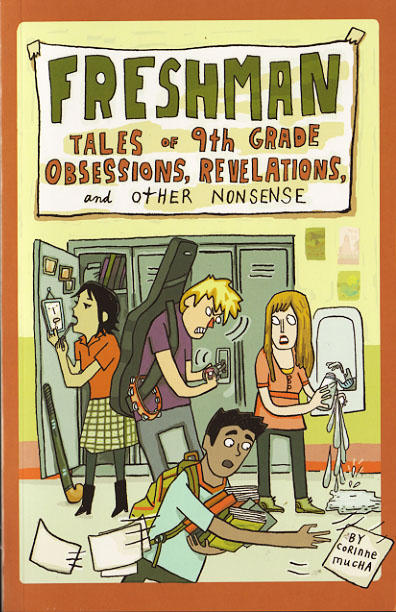
Freshman: Tales of 9th Grade Obsessions, Revelations, and Other Nonsense by Corinne Mucha; Zest Books, 2011


Sweet and goofy, this graphic novel follows a girl through her freshman year in high school, with all of its social posturing and anxiety.  Annie makes and loses friends, tries new things (with mixed results), and learns to navigate her teenage world.  Available in the Quigley Youth Room in our Youth Graphic Novel collection.

Monday, October 31, 2011

Signing for Babies!

Signing as a first language reduces frustration, deepens bonds and accelerates speech development.  Learn how to enhance early literacy skills by practicing a variety of signs.  Learn how to teach ASL to your baby.  This series of classes is for caregiver and infant (ages 2 months to pre-verbal).  Registration for the 4 week session is required.  Sign up online (http://www.libraryinsight.com/eventdetails.asp?jx=jip&lmx=385029) beginning October 17th; classes begin on Monday, October 31st.
This program is generously sponsored by the friends of the Wellesley Free Libraries.


For more information on baby signing, go to

http://abcnews.go.com/Health/story?id=1657862&page=1

Highlights from our Howl-O-Ween Party on 10-30-11

Six dogs in full costume attended our Howl-O-Ween party yesterday, some participating in one-on-one reading sessions with kids and others mingling with party guests.  Participants made spooky crafts, listened to Halloween stories, and nibbled on seasonal snacks.
Our next Read to a Dog event will be on Saturday, November 19th from 10-12;
Kids in grades K-4 can sign up for a 15 minute session with one of our fabulous reading buddies!  Sessions are 15 minutes long.  Bring your own book or read one of ours.
Pre-registration is required.  To sign up, stop by the Children’s Room at the Main Library or call 781-235-1610 ext 1108. Sign-ups start one week in advance, November 12.

Wednesday, October 26, 2011

Why Books? — The Zena Sutherland Lecture by Mo Willems in The Horn Book


It is an honor to have been asked to talk about books while they still exist. (Spoiler alert: next year’s Sutherland lecturer will be a downloadable app.)

And that, my friends, is the key to my current two-word existential dilemma: “Why books?”
In the past it was enough to say that if you get a book into a kid’s hands, you’re creating a “lifelong reader.” But why does that matter? Do we really want “lifelong readers”? Shouldn’t they at least get to take occasional bathroom breaks? Why is this extraneous question here in the middle of these other ones? And, what does reading do that makes it so special?
To be honest, books as we know them are looking pretty vulnerable right now. They can’t talk back to you. If you shake them, they don’t do things. You can’t turn them on. They don’t make sounds. They don’t have word jumbles or other not-terribly-fun games. What do they do? With all the new technological possibilities, why not file Books between Betamax and Eight-Track Tapes?
I’ve thought about this very seriously of late and I’m not out of the rabbit hole yet, so first let me just go through my own personal journey with the nitty-gritty of making books to see if there is value to be found there.
In the past eight years or so, I’ve written and illustrated numerous books, yet I really never know what I’m doing when I create a book. That is why I love it. It’s an adventure with no guarantee that it will work out in the end. I am alone in a sea of ideas, hoping to catch a current that will lead to an undiscovered land. Well, I’m not completely alone. I have the structure of my past work, and I am guided through the storms by this simple mantra: always think of your audience; never think for your audience.
This is done by putting as little as possible into the final work so as to leave room for my audience to enhance the story. As a simple test, if I re-read one of my manuscripts and I understand exactly what is happening, then the manuscript has too many words. And if I look at the images without the words and I can fully understand the story, there are too many drawings. It is only right when both words and image need each other to make any sense. They need to be as close to incomprehensible, separately, as possible.
Yes, I make incomprehensible books for illiterates.
Incomprehensible also because I never know what the book I’ve made “means.” That’s my audience’s job. You, the reader, create meaning out of the story; I just set the table. The fundamental truth of this was driven home when I read two early reviews for my first picture book, Don’t Let the Pigeon Drive the Bus! The first one said, “I love this book because it teaches perseverance. It teaches kids never to give up. To fight on.” The second review said, “I love this book because it teaches kids to value the word ‘no,’ to know when to stop.”
Here’s the thing: both reviews were right. Their authors each brought their own selves to the story and in their minds created meanings that had never occurred to me. They became the co-authors of the book, implanting the meaning that was purposefully omitted, or perhaps obscured. Because, truth be told, I don’t have any answers. I’m not interested in them.
Why would I want to write about things I know? I already know them. I prefer to write about things I don’t know, about things that perplex me, create a sense of wonder in me, or are simply weird. So I write about things like: What is a friend? How do you keep a friend? How does what you do by accident change your environment and how do you come to grips with that? Wouldn’t it be cool to drive a bus? You know, the sort of fundamental, deep emotional questions that we all have. (All rules have exceptions and my second book, Time to Pee! is one. Personally, I’ve been urinating with great success for years, so I did know what I was writing about that time. But I wasn’t sure why my kid was reluctant to do it in a particular room.)
Writing is, like any athletics, a learned skill refined only by consistent and strenuous workouts over time. I learned how to write from years and years of writing and performing sketch comedy, making short animated films, and writing cartoon strips, all of which stemmed from a deep abiding love of sketch comedy. Bill Cosby’s albums, the Monty Python television series, Peanuts comic strips—they are all perfect sketches. Clean, pure, but structured with a deep understanding of the world and how it works.
I learned how to write for children, however, with great reluctance. As fate would have it, in my strivings to be a sketch comedy writer I found myself being hired to write sketch comedy for a show that targeted children, called Sesame Street. At first I didn’t care that I was working on a kiddie show; I was writing sketch! Just like my pals on MTV or in the hipster clubs. If I squinted just right, the “kids” part of my work disappeared.
Then, over a season or two, something unexpected happened. I realized that writing for Sesame Street wasn’t easier, or even equally as difficult, as the sketch material I’d been doing previously. It was harder. I couldn’t use cultural modifiers: the entire world of pop culture references, that lazy backbone of sketch, was lost to me. Arc de Triomphe, Super Bowl, Cadillac. Those are just silly sounds to kids; they have no emotional meaning. Not because kids are stupid, but because they’re new. They just got here. All they have is jealousy, anger, love, joy, fear. Writing for a kid means you can’t exploit genres and fads and fashions. The only weapon left in your arsenal is truth.
It was revelatory and life changing (and frankly liberating: I didn’t have to keep up on pop culture, freeing up lots of time for adventures). My path was set; now I wanted—no, I was compelled—to write for people who were just starting out in life.
This began a period of great introspection. I thought long and hard about my childhood and slowly realized a fundamental truth that is the complete opposite of what everyone tells you about childhood: namely, it sucks to be a kid.
Certainly, in contrast to the life of a grownup, kids have it hard. Every piece of furniture is built to the wrong scale for you. You have to ask permission to urinate. And some adult might say no. Try this as a test: next time you’re at a dinner party, say, “May I go to the bathroom?” Then imagine your hostess saying, “No, I don’t think so. You’re staying right there. And finish those smelly vegetables. I know you want to retch. I don’t care. Eat them.”
And kids don’t have years of experience to fall back on. Every disappointment, every failure, is a world-stopping first. How do they survive? How did we all survive that? I’m not sure. But recently I’ve realized they have one shield in their lives that most of us adults have lost: they haven’t yet learned to be embarrassed.
And that’s what embarrassment is: a learned behavior.
So TV got me to want to write for unembarrassed kids. But television wasn’t done teaching me an essential key to writing.
At some point in my career I found myself being asked to create a TV show. Foolishly, I was told I could do anything I wanted; more foolishly, I did. I created a show called Sheep in the Big City. Has anybody heard of the show? Raise your hands. Okay. You six guys. Great. You made up sixty percent of my audience.
For the rest of you, the show was about a sheep. And a big city. The sheep, named Sheep, is being chased by General Specific and his henchman Private Public, members of a top-secret military organization named The Top-Secret Military Organization trying to capture this urban sheep to put it in a sheep-powered ray gun. Now why not use another sheep, you ask? Well, because they had already built the ray gun to his specifications. Mixed in with the episodes are lots of spoof commercials for products—the Oxymoron Brand of useless products.
And every episode ended with thirty seconds of a ranting Swede.
Almost as quickly as it hit the air this show was canceled. Can you believe it?
I couldn’t.
I’d worked so long and so hard, ensuring that every joke was as funny, or as weird, as possible. Still, very, very few people enjoyed it. I was flummoxed.
The real reason why the show was canceled came not from the network but from a ten-year-old on some message board who wrote, “I don’t like this show because the writer is trying too hard.” Trying too hard? That shocked me to my core.
I could not think of another industry where this would be a problem. “Oh, man. Y’know that plumber, Joe? What is up with that guy? He shows up early. He comes in, he plumbs the hell out of the house, doesn’t take a single cigarette break, I don’t see butt once. He’s working soooo hard…I don’t trust him.”
But in writing it’s different. The people watching Sheep in the Big City or reading my stories are not interested in me or the work I do. It shouldn’t look like work to them. It’s just a story. A magical thing that suddenly, effortlessly, appears and entertains and provokes. Certainly such a thing can’t be made. The lesson is, if you’re not invisible, you’re not doing your job. So, work harder until no one sees you.
I should have known that. I should have known better.
You know, I started out doing stand-up comedy when I was in high school. And the reason I did was because the comedy club was the only place I could go and be guaranteed that no one would laugh at me. But over time you develop those muscles. You write joke after joke after joke after joke, and, ever so slowly, you learn what doesn’t work. What you learn is not “what is funny” but “what is not funny.” So when you’re writing, you write to get rid of all the not-funny stuff until what’s left, hopefully, works. I want to have as few words as possible. I want the whole story to just be hanging by a thread. So my audience will become invested in it and save it.
It’s the same with my images. Everything I do is reductive. I make my drawings as simple as possible to the point of abstraction. Put as little in as possible. Because kids can “make” books, I consciously design my characters so that they can be easily copied by a five-year-old.
Every month, I get a box of fan mail—it’s just awesome. Kids send me their books. Their actual books. Don’t Let the Pigeon Operate the Catapult. Don’t Let the Pigeon Audit Your Neighbor. The Pigeon Gets a Cell Phone. All kinds of just amazing stuff, and that’s the highest possible compliment; that’s the ultimate goal.
It’s how I got started. I started out drawing Charlie Brown pictures. I loved it so much I wrote to Charles Schulz once when I was five and said, “Dear Mr. Schulz, may I have your job when you die?” Man, I loved Charlie Brown. I grew up in the early seventies, and every other pop cultural character was blissfully happy. Remember? The landscape was filled with gleeful rodents on lithium running across the screen. I felt bad that I wasn’t as happy as those mice. But there was always “Chuck.” A kid whose life was worse than mine. Awesome.
That comic strip was printed on cheap newsprint. It was meant to be thrown away, unlike a piece of art. But it was useful. It was useful to me. That corner of the newspaper that showed up every day gave me more consolation in my lonely childhood world than anyone or anything.
That’s what I want my books to be: utilitarian. You don’t drink coffee out of a mug because it’s a work of art. You drink out of a mug because it works, then you worry if it is pretty or not. In the same way, whatever ideas you’re going to pour into my book, I need to make sure it can hold them first. Because that’s all a book can do. It can hold just two ideas: the author’s and the audience’s.
But the book doesn’t work, it can’t work, unread.
So back to my question of “Why books?” What if books are better because they don’t do things, because they can’t do things? What if the thing that makes books great, that makes them essential, is that books need us? They’re simple. You invest in them and become part of them. You contribute. They can be read, but they can also be played. I’m not really interested in you guys reading my books a hundred times; read it twenty times and then make your own story. Go from consuming a story to creating your own. This is a magical thing to me.
I have a running machine in my house, and if I set that machine for twenty minutes of fast running and leave the room to get some tea and fried eggs, it doesn’t know the difference! Nor, I might add, does it care.
And I think that’s what most enhanced digital books are at this point. With all their bells and whistles and word jumbles and assorted narrative killers, after we turn them on, they don’t need us. Turn it on and leave the room, and the book will read itself.
But a real book is helpless. It needs us desperately. We have to pull it off the shelf. We have to open it up. We have to turn the pages, one by one. We even have to use our imagination to make it work. What does Elephant Gerald sound like? Is the Pigeon a boy or a girl? Does Leonardo the Terrible Monster live in the city or in the country?
We have to do all of that, we have to do the work with our little minds and our flapping flights of fancy. So, suddenly, that book is not just a book; it’s our book. We’re the ones making it work. We’re the ones making it sing. Right there in our chairs as we gently flip the pages, we are, at our own pace, creating a living story just by reading.
And you don’t have to turn off a book during takeoff and landing.
So, maybe books work because they make us work. Maybe we need them for needing us, just like we need real friends, not the digital imitations on Facebook.
Thank you for bearing with me.

Tuesday, October 25, 2011

Highly recommended...

'Wonderstruck': A Novel Approach To Picture Books


September 13, 2011

A Wordless World: The story of Rose, a deaf little girl in Brian Selznick's Wonderstruck, is told primarily in pictures. "We experience [Rose's] story in a way that perhaps might echo the way she experiences her own life," Selznick explains.
Brian Selznick A Wordless World: The story of Rose, a deaf little girl in Brian Selznick's Wonderstruck, is told primarily in pictures. "We experience [Rose's] story in a way that perhaps might echo the way she experiences her own life," Selznick explains.
September 13, 2011
It's not often that a writer can illustrate his own books, but Brian Selznick is that rare find. He began his career as an artist collaborating with authors on children's books. But he gradually realized that he wanted to tell his own stories in both words and pictures — and to do that, Selznick invented a unique narrative device.
Wonderstruck
Wonderstruck is both a novel and a picture book, a form Selznick first experimented with in The Invention of Hugo Cabret, when he had the idea of telling a story in much the same way that film does.
"I thought: Is there a way of combining what the cinema can do with panning, and zooming in and out, and edits, and what a picture book can do with page turns, and what a novel does?" Selznick says.
Selznick's illustrations work like a camera, zooming in on details and following his characters around as they move through the world. In the beginning of The Invention of Hugo Cabret, the reader follows a boy through a grate in the wall, down a hallway, to an old man in a toy booth who sees a clock, and behind the number 5 in the clock, there's the boy ... (Click here to see that opening sequence of drawings.)
In Wonderstruck, Selznick wanted to take this narrative experiment a step further. "I had this idea to try to tell two different stories," he says. "What if I told one story just with pictures, and then told a completely different story that was set 50 years later with words? And then had these two separate stories weave back and forth until they came together at the end?"
Wonderstruck is the story of Rose and Ben, a young boy and girl who live years and worlds apart. By the end of the book, the reader learns they have a special connection. But from early on, they have one thing in common: She is deaf, and he loses his hearing when he is struck by lightning.
Selznick says the idea for the book began forming when he saw a documentary about deafness and deaf culture. One of the deaf educators emphasized how hyper-attuned deaf people are to the visual world. So Selznick set out to tell the story of a deaf character in pictures. "We experience [Rose's] story in a way that perhaps might echo the way she experiences her own life," he explains.
Hugo and Isabelle look out over Paris from behind a clock face in Selznick's The Invention of Hugo Cabret.
Rose's story, told almost entirely through Selznick's compelling black-and-white illustrations, alternates with Ben's story, which unfolds in written form. At first, the reader is not sure how the two stories relate, but here and there, the characters' worlds collide. Both get caught in a storm, both go in search of their parents, both find refuge in New York's Museum of Natural History (one of Selznick's favorite destinations when he was a kid growing up in New Jersey). When Ben and Rose finally do meet, Selznick says, the book becomes all about how we communicate with each other.
"At the end of the story, we have scenes where there's a deaf character who signs, a hearing character who signs, and a deaf character who doesn't sign — and they all have to have a conversation," Selznick says. "And so who speaks, who writes, who can sign ... it all becomes mixed up until they can figure out a way to communicate."

More On Brian Selznick's Work

Creating these books is a complicated process, Selznick says, and he is always a little surprised in the end when everything comes together. When he's in the middle of it, it's a little like looking for buried treasure.
"It's sort of like going through a treasure map backwards in a certain way, where I know what I want it to be, but I don't know how to get there," he says. "It does end up feeling like I have been on this really exciting journey that I ultimately hope that the reader will be excited to be on, too."
A writer and artist who is fascinated with film, Selznick is about to see a fantasy come true: In November, the film version of The Invention of Hugo Cabret, directed by Martin Scorcese, will be released on the big screen.

Terrariums @ the library!

Kids had a great time creating terrariums on Saturday as part of our Wellesley Reads Together programming!

And so did our librarians, Geralyn and Michele!

Wednesday, October 19, 2011

What we're reading right now...


While Small Steps is the sequel to Holes, it is not necessary to have read Holes to lose yourself completely in Small Steps.  This 2006 follow-up addresses class, race, gender and physical disabilities in a refreshing and thoughtful manner not often encountered in children's literature.  Armpit, our protagonist, is an African-American teenager who spent time in a juvenile dentention center for commiting a violent crime that landed two victims in the hospital.  Back at home after incarceration, Armpit has plans, his "small steps" toward  a successful and honest life. We see Armpit continually striving to do the right thing, even when others around him try to block his path.  Overcoming stereotypes and respecting others are major themes in this work and Armpit's belief in himself and his kindness towards others make this an important (but not didactic) book for middle school and older readers.


School Library Journal Review
Gr 5-8-This sequel to Holes (Farrar, 1998) focuses on Armpit, an African-American former resident of Tent D at Camp Green Lake. It's two years after his release, and the 16-year-old is still digging holes, although now getting paid for it, working for a landscaper in his hometown of Austin, TX. He's trying to turn his life around, knowing that everyone expects the worst of him and that he must take small steps to keep moving forward. When X-Ray, his friend and fellow former detainee at the juvenile detention center, comes up with a get-rich-quick scheme involving scalping tickets to a concert by teenage pop star Kaira DeLeon, Armpit fronts X-Ray the money. He takes his best friend and neighbor, Ginny, a 10-year-old with cerebral palsy, to the concert and ends up meeting Kaira, getting romantically involved, and finally becoming a hero by saving her life when her stepfather tries to kill her and frame him. Small Steps has a completely different tone than Holes. It lacks the bizarre landscape, the magical realism, the tall-tale quality, and the heavy irony. Yet, there is still much humor, social commentary, and a great deal of poignancy. Armpit's relationship with Ginny, the first person to care for him, look up to him, and give his life meaning, is a compassionate one. Like Holes, Small Steps is a story of redemption, of the triumph of the human spirit, of self-sacrifice, and of doing the right thing. Sachar is a master storyteller who creates memorable characters.
-Connie Tyrrell Burns, Mahoney Middle School, South Portland, ME (c) Copyright 2010. Library Journals LLC, a wholly owned subsidiary of Media Source, Inc. No redistribution permitted.

Roger Hargreaves books now available in vast quantities!


Are you a fan of the Little Miss and Little Mr. books by Roger Hargreaves?  Stop by the children's room and check out our new bin of books!  These popular titles have come into fashion once again and the children's room has been met with many requests for these books; in response, we have purchased multiple copies of the books in this series and we are pleased to say that they are absolutely flying off the shelves!
 
"Roger Hargreaves was born in 1935 in Cleckheaton, Yorkshire, England. He is the British cartoonist who created the likes of Mr. Nosey and Mr. Grumpy, the simple little cartoon Mr. Men and Little Miss characters and books.
He was the creative director for an advertising agency in London when he got the idea for his books. He first began to market the idea in the early '70's, starting with Mr. Men, which appeared in books, BBC cartoons and as a comic strip in the Daily Mirror. The characters spawned over 700 related products and brought along the introduction of the Little Miss books introduced in the early '80s.
The two series reached worldwide sales of 85 million volumes and were printed in over 20 different languages. Hargreaves died on September 12, 1988 in Kent, England."
 
- Bowker Author Biography

Tuesday, October 11, 2011

Arthur's Nose, from Anita Silvey's Children's Book-a-Day Almanac

Grandparent Kits are here!

We have Grandparent Kits! The Wellesley Free Library now has a limited number of Grandparent Kits available; these kits contain books and activity ideas and can be borrowed for one week. The kits can be customized according to age and special interests. To request a kit, call the children's department at 781-235-1610 x 1108.

Monday, October 3, 2011

We now have Playaway Views!


What is a Playaway View?

  • Portable
    Includes a head-phone jack and speakers
  • Convenient
    Pre-loaded content; no internet or downloads needed
  • Durable and Scratch-Resistant
    Made with kids in mind
  • Multiple Videos
    Each View holds hours of great content,
    bundling curated content just for you
  • Chargeable
    Simply use the included standard AC Adaptor
Come in and check one out!

Drawing From Memory by Allen Say

My new favorite book!  A must-read for Allen Say fans and aspiring artists.

 
School Library Journal Review
Gr 4 Up-Say tells the story of how he became an artist through a vibrant blend of words and images. Beginning with his boyhood in World War II-era Japan, he traces his life-changing relationship with Noro Shinpei, an illustrious cartoonist who became his surrogate father figure and art mentor. Illustrations are richly detailed and infused with warmth. Exquisite use of light makes night scenes glow, and the mid-20th-century Tokyo setting is captured with vivid authenticity. A variety of media and artistic styles, including full-color paintings, black-and-white sketches, photographs, and comic-book panels, adds texture and depth to the narrative. Fans of the artist's work will take particular delight in seeing sketches from his student days. Simple, straightforward sentences and a conversational narration in combination with a wealth of images will appeal to aspiring artists and reluctant readers alike. This book covers much of the same material as Say's autobiographical novel, The Ink-Keeper's Apprentice (Harper & Row, 1979), but the lively mix of art and text will draw in a new generation and a slightly younger audience. The somewhat abrupt ending, with Say moving to the United States, may leave readers wishing for a more extended epilogue or sequel, but that is simply because his story is so engaging. Readers of all ages will be inspired by the young Say's drive and determination that set him on a successful career path.-Allison Tran, Mission Viejo Library, CA (c) (c) Copyright 2010. Library Journals LLC, a wholly owned subsidiary

Thursday, September 22, 2011

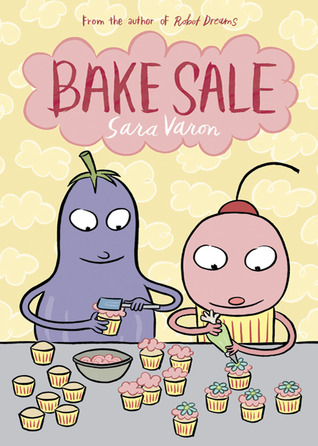
Bake Sale by Sara Varon

Now available in our Children's Graphic Novel collection!

From Publishers Weekly:

In a world of anthropomorphized food, Cupcake is a pink cupcake who runs his own bakery and idolizes the culinary work of Turkish Delight, a famous foreign chef. Cupcake's best friend, Eggplant, has a way for Cupcake to meet his idol, but first Cupcake must spend extra time earning enough money for the plane trip to Turkey. Cupcake has to drop out of the band he enjoys and go the extra mile to sell as many baked goods as he can. Much of the book shows Cupcake's hard work, which doesn't actually get him anywhere in the end because he gives his money to Eggplant-who has lost his job-instead. This seems to be showing that it's good to help others, and not to idolize when one can believe in oneself. However, it does make the ending feel a tad anticlimactic and as if nothing has been solved, since it seems that Cupcake has worked hard and pushed himself for nothing. Altogether the book has a mellow, easygoing feel, using soft colors and showing many yummy foods. As an added bonus, recipes for how to make the various scrumptious meals readers watch Cupcake prepare are provided. As in her previous Robot Dreams, Varon's art is simple and cozy, making this sweet tale a confection of its own. Ages 9-12. (Aug.) (c) Copyright PWxyz, LLC. All rights reserved.

Thursday, September 15, 2011

Tomi Ungerer's Chronicler of the Absurd exhibit at the Eric Carle Museum


Chronicler of the Absurd


This exhibition celebrates Ungerer’s 80th birth year. A trilingual author, Ungerer has published over 140 books ranging from his much loved children’s books to his controversial adult work.
This exhibition documents the bulk of Ungerer’s career as a writer and illustrator of children’s books. Included in the exhibition, among others, will be examples from Ungerer’s first book, The Mellops Go Flying (1957), as well as The Three Robbers (1962), Flat Stanley (1964), and Moon Man (1967).
June 18 – October 9, 2011
The Eric Carle Museum of Picture Book Art
125 West Bay Road
Amherst, MA 01002
T (413) 658-1100 / F (413) 658-1139
info@carlemuseum.org

Wednesday, September 14, 2011

Join Us For Sunday Story Times!

Please join us in the children's room at 2 p.m. on Sunday, September 18th for our Sunday Story Time! Families with children ages 4-6 will enjoy stories and a craft or activity. No registration is required for this program.

Tuesday, September 13, 2011

Guinea Pig Craft on Friday, 9/16 at 10:30 a.m.

Come to the main branch on Friday at 10:30 and make your own guinea pig on a string! Stories and Craft with Lee requires no pre-registration and is recommended for children ages 2-5.

Friday, September 9, 2011

Check Out Our Bins!

Books in Bins! Come in and check out our new high-demand picture book collection! Each bin is packed with picture books about a specific popular subject; if you're looking for books about princesses, firefighters, pirates, dinosaurs or trucks, come in and check out our bins!

Friday, September 2, 2011

MEET THE AUTHOR - Lincoln Peirce 9/9/11 @ 4pm in the Wakelin Room.

“Big Nate gets an ‘A’ for awesome!”
—Harry Bliss, New Yorker cartoonist
"I love it; it cracked me up!"
—Doreen Cronin, author of Diary of a Worm
“Caution: Don’t read Big Nate in public; you will laugh out loud.”
—Alec Greven, ten-year-old author of How to Talk to Girls

Meet writer/cartoonist Lincoln Peirce, creator of the Big Nate
comic strip, at the Wellesley Free Library to talk about the
third novel, Big Nate on a Roll, in his hilarious Big Nate
series! He'll talk about how he puts together stories for his
books and give a drawing demo, explaining cartooning tools and
vocabulary!

This program is sponsored with Wellesley Books and books will be
available for purchase and signing. For further information, stop
by the Children’s Department, call us at 781-235-1610 ext 1108 or
visit our website at www.WellesleyFreeLibrary.org. 

The Last Book of Summer...sob!


Imagine a summer in Water Mill, riding bicycles and going to the beach and spying on everyone around you as a drama unfolds; someone is leaving notes all over town and Harriet is determined to expose the culprit!  For fans of Louise Fitzhugh's literary masterpiece, Harriet the Spy, this summer follow-up in Water Mill is a delicious second course.  Focusing on Harriet's mousy friend Beth Ellen,  The Long Secret is about growing up, finding a voice, and learning that there is much more to life than what is visible on the surface.  A wonderful summer read, The Long Secret is the ultimate Labor Day weekend book, a way to sink your toes into that hot Long Island sand one more time before bidding the summer adieu.

Our Young Scientists Robotics program with Professor Robbie Berg from Wellesley College was well-attended by many enthusiastic families at the Hills Branch on August 23rd !

Tuesday, August 23, 2011

Blog of Note

Jon Scieszka (SHEH-ska) was born September 8, 1954; he is the author of many hilarious children's books.  In  2008, Jon was named the National Ambassador for Young People's Literature.

His blog, Jon Scieszka Worldwide http://www.jsworldwide.com/ , covers every imaginable topic realted to Jon Scieszka, including news about his books, Frequently Asked Questions, his touring schedule and his personal history, all reported with great humor.
 Well known for his fractured fairy tales (The Frog Prince, Continued, The True Story of the Three Little Pigs, and The Stinky Cheese Man and Fairly Stupid Tales), Jon has developed a devoted fan base that ranges from middle-grade readers (The Time Warp Trio) down to the pre-school set (Trucktown). His Guys Read website http://www.guysread.com/ addresses the specific needs of boy readers, a group that could benefit from a little attention now and then.  His mission is to help boys become self-motivated, lifelong readers.

Monday, August 22, 2011

Jon Scieszka - Exclusive Video Interview

Junibacken


Stockholm: Junibacken


Junibacken is a children’s museum devoted to Swedish children’s literature, featuring Astrid Lindgren, author of the Pippi Longstocking books.  The museum includes a theater, restaurant and the largest children’s bookstore in Sweden.  http://www.junibacken.se/lang/english

Galarvarvsvagen Stockholm 115 21
Sweden
46 8 587 230 00


2007 Harry Potter Night at the Wellesley Free Library

Friday, August 19, 2011

Anita Silvey talks about Wemberly Worried!


For some children, the end of August means preparing to go to school for the very first time. For them August has been designated Get Ready for Kindergarten Month. If you are hunting for a book that might help the very young overcome some of their anxieties about school, today we’ll look at Kevin Henkes’s Wemberly Worried and tomorrow, Antoinette Portis’s Kindergarten Diary.
First published in 2000, Wemberly Worried appears to be one of the many Kevin Henkes titles headed for classic status. As a young artist, Kevin got a head start on creating books for children. He always knew he wanted to write and illustrate books, and he got his foot in the door of a publisher when he was nineteen. Since then, he has crafted one fabulous book after another.
Although Kevin is now married with children of his own, he is one of those gifted creators who has never forgotten what it feels like to be small and young and vulnerable. His books always have a truth to the way children think and feel.
In our book of the day, Kevin opens the story with these words: “Wemberly worried about everything.” And readers get to see all the things that concern our mouse heroine—such as shrinking in the bathtub. Although everyone in her family tries to tell her not to worry—including her pretty hip grandma mouse sporting a “Go with the Flow” T-shirt—Wemberly just can’t help the thoughts that go through her mind. The radiator might contain a snake; a tree might fall on their house. So when school looms, she worries about the beginning of school. On a two-page spread her worries are even listed in large type: a mean teacher, a smelly room, finding the bathroom.
But of course, in Kevin Henkes’s universe, everything turns out for the best. Wemberly finds a friend and discovers that her teacher, Mrs. Peachum, may not be so bad. By the end of the first day, she jauntily walks out of the room, telling everyone she’ll return. “I will,” she says. “Don’t worry.”
By creating a character full of neuroses, Kevin Henkes allows children to laugh at their own fears and feel that, in the end, going to school might just not be so bad after all.
So to relieve your children’s anxiety—and your own—about the beginning of a new school year, pick up Wemberly Worried. I should probably read it to my graduate students on the first day of class—it applies equally to them.
Here’s a page from Wemberly Worried:


Thursday, August 18, 2011

Because even dogs have birthdays...


We had a lovely birthday party for Mariah tonight!  Mariah is one of our Read to a Dog hostesses and turned 11 today.  Please check our calendar http://www.libraryinsight.com/calendarkids.asp?jx=ji for upcoming Read to a Dog events this fall!

E.B. White Award for Picture Books

WINNER: The 2010 E.B. White Award for Picture Books


The Curious Garden
by Peter Brown
978-0316015479
Little, Brown Books for Young Readers
Price: $16.99 HC
Pub date: 4/09
While out exploring one day, a little boy named Liam discovers a struggling garden and decides to take care of it. As time passes, the garden spreads throughout the dark, gray city, transforming it into a lush, green world. One boy’s quest for a greener world… one garden at a time.
The committee said: “One of those books that shows what effect one person can have. The art and language works together beautifully; it’s inspiring, but not at all preachy. Bravo!”


Peter Brown will be visiting the Wellesley Free Library in September; stay tuned for details!

Wednesday, August 17, 2011

Reading Rainbow

Reading Rainbow may have gone off the air in 2006, but we have DVDs in the children's room; come in and check one out!


Monday, August 15, 2011

Along a Long Road by Frank Viva --- anxiously awaited!!

Follow that road!

Speed off on an eventful bicycle ride along the bold yellow road that cuts through town, by the sea, and through the country. Ride up and around, along and through, out and down.

Frank's striking graphic style is executed in just five joyous colors, and his spare, rhythmic language is infectious.

Hit a bump?
Get back on track!
Reach the end?
Start again!


Frank Viva is an illustrator and graphic designer who has won more than 300 awards. His illustrations have appeared in Time, Esquire, the New York Times, the Boston Globe ­and on the cover of the New Yorker. A past president of The Advertising & Design Club of Canada, he is passionate about cooking, wine, and his daily bike ride to the office. This is his first children's picture book.

Quote of the day...

"It is not often that someone comes along who is a true friend and a good writer."

Friday, August 12, 2011

Under One Sky-A Multicultural Celebration with Davis Bates & Roger Tincknell

Changes in our collection...

Easy 1 and Easy 2 picture books are now united in one wonderful collection!  Shelved alphabetically by the author's last name, the picture book collection is one of the jewels in the children's room; come in and explore!


Young Scientists Program August 4, 2011

A recent Young Scientists program at the Hills Branch; reptiles were presented by the Museum of Science!

Tuesday, August 9, 2011

New Book Group This Fall!

Chick Chat is a book group for young adults in grades 6,7, and 8. While the group focuses primarily on “chick lit,” the group is open to everyone. Light refreshments will be served. We hope to see you there!

Chick Chat's first title will be Bras and Broomsticks by Sarah Mlynowski. Living in New York City with her mother and her younger sister, Miri, fourteen-year-old Rachel tries to persuade Miri, who has recently become a witch, to help her become popular at school and to try to stop their divorced father's wedding.

Chick Chat's first meeting will be on Saturday, September 17th at 3 p.m. in the Quigley Youth Room.  For more information or to pick up a copy of the book, stop by the children's room or call 781-235-1610.


Tuesday, August 2, 2011

More about Mo

"My work in children’s books, animation, television, theater, and bubble gum card painting have garnered 3 Caldecott Honors, 2 Geisel Medals, a Geisel Honor, 2 Carnegie Medals, 6 Emmys, and multiple bubble gum cards."

To look at the doodles of Mo Willems and much, much more:

Are you a Mo Willems fan?

Reaching an almost cult-like status, Mo Willems has made an enormous impact in the world of children's literature in recent years.  His Knuffle Bunny series is so popular at the Wellesley Free Library that patrons are unlikely to find an available copy on the shelf, and his Elephant and Piggie beginning reader series is gobbled down in huge greedy mouthfuls by happy families, to the point where we are finding that over 7 copies of each title is not enough to satiate rabid fans.  And let's not forget the Pigeon!  His sarcasm and dry wit has won over millions; follow him on Twitter @The_Pigeon


For more on Mo Willems go to:
http://www.mowillems.com/

Anita Silvey's Book-a-Day Almanac

Daily children’s book recommendations and events from Anita Silvey.
Discover the stories behind the children’s book classics . . .
The new books on their way to becoming classics . . .
And events from the world of children’s books—and the world at large.


Anita Silvey has been the editor of The Horn Book review journal and the publisher of children’s books at Houghton Mifflin. She estimates that she’s read about 125,000 kids books over the past 40 years. When she’s not reading, she teaches courses in children’s literature, writes nonfiction, and travels all over the country talking to parents, teachers, and librarians about the best books for kids. Visit her at anitasilvey.com.

Friday, July 29, 2011

Blog of Note


Try Roger Sutton's blog, Read Roger.  He's been the editor in chief of The Horn Book, Inc, since 1996 and was previously editor of The Bulletin of the Center for Children's Books as well as a children's and young adult librarian.  Read Roger is a great source for the latest and greatest information in the world of children's literature as well as bursting at the seams with lively conversation.

http://readroger.hbook.com/

Hilary and Abe

Enjoy this animated short featuring Abraham Lincoln and Hilary Clinton discussing the merits of modern libraries!

http://www.xtranormal.com/watch/12333641/dancing-with-abe

Cricket Magazine


Bursting with fiction, fantasy, folk tales, adventures, poems, history, and biography, Cricket magazine has won nearly every award given to children’s literary magazines. For over 30 years, Cricket has delivered quality writing and illustrations from authors and illustrators like Lloyd Alexander, Tomie DePaola, and Trina Schart Hyman. Advertisement-free, this magazine creates a space where children’s voices can be heard through its monthly story, poetry, art, and photography contests and its lively “Letters to the Editor” page, known as “The Letterbox.”  In this day and age filled with commercial offerings for children, Cricket magazine gives us sanctuary and nourishment, a safe place for children to explore the world. 

Recommended for ages 9 to 14.

Francesca Lia Block

Who is Francesca Lia Block?  This Los Angeles native writes postmodern, magic-realist tales that are at once both gritty and beautiful.  Her descriptive writing style is sparkly and transcendent, lending an otherworldly quality to harsh urban landscapes. She describes her own work as “contemporary fairy tales with an edge.”

The Youth, Young Adult and Adult Fiction collections feature such Francesca Lia Block titles as Weetzie Bat,  Echo, Girl Goddess #9, The Hanged Man, I Was A Teenage Fairy, The Rose and the Beast: Fairy Tales Retold, Wasteland, and Violet & Claire.

To learn more about Francesca Lia Block, log on to  http://www.francescaliablock.com/books

or follow her on Twitter @francescablock

Friday, February 11, 2011

The Mostly True Adventures of Homer P. Figg by Rodman Philbrick

Homer and his older brother Harold are orphans living on their uncle's farm in Maine during the Civil War. Harold is tricked into joining the Union Army and Homer wants to rescue him from military service. Since their uncle is a hard task master both boys would love to run away and have a life of their own. What follows is an adventure in running away, encountering outlaws and other nefarious characters. Fortunately help comes along from a Quaker farmer active in the Underground Railroad and a naiive clergyman who accompanies Homer on his quest to save Harold. The fun of the adventure is Homer's ability to reinvent the truth and tell tales or lies as needed to escape various situations. The book is a very satisfying and humorous read. You also get a first person account of what life was like during the Civil War.

Thursday, September 16, 2010

Revolver by Marcus Sedgwick

Life is difficult and often unexpected in 1910 frontier Alaska.  Sig's father dies, accidentally frozen to death when he attempts to cross a thawing lake.  Fourteen year old Sig is left to guard the corpse while his step mother and sister travel to the distant town for help. Sig's grief and loneliness is soon interrupted by a violent mysterious stranger who claims that Sig's father owes him a fortune in gold. Sig knows nothing about any fortune, but he does know that there is a loaded Colt revolver hidden in the cabin. If only he could get to it -- then again, Sig's only fired the gun once in his life, and never thought his life might depend on aiming it at another human being, no matter how terrifying the circumstances.

This is a taut, tightly written novel of suspense with the added pressure of the forbidden frozen Alaskan landscape. Give yourself lots of time -this is a hard one to put down!

Thursday, August 19, 2010

The Evolution of Calpurnia Tate by Jacqueline Kelly


In 1899 in rural southern Texas, girls were expected to learn to keep house, make fine embroidery and cook for their families. Calpurnia Virginia Tate, known as Callie Vee, feels this is most unfair and would much prefer to spend time with her grandfather exploring nature and learning about Charles Darwin. She would like to have the same opportunities for an education and a paying job as her 6 brothers do. Her parents disagree of course. Only her grandfather understands and it is his interest in her and his sense of humor which save the day for both of them.

Crispin: the end of time by Avi


This is the final book in the trilogy which began with Crispin, the Cross of Lead. Crispin and Troth are in rural France. They are lost and do not speak French. Some helpful villagers lead them to a convent where Troth feels more at home than she has ever felt before. Crispin reluctantly leaves her behind to search for the country of Iceland where Bear had told them they would find a land of freedom. He finds a way when he meets a company of musicians and thieves. However he must escape from them to pursue his dream of reaching Iceland. If you have read the first two books you will want to finish the journey. If you missed the first two books, the story will still satisfy your sense of adventure in a dangerous and exciting land.

When You Reach Me by Rebecca Stead


What is time? Can you move between time now and another time? Can a person reach out to help another person in another time and place? If you have read A Wrinkle in Time by Madeleine L’Engle you will appreciate the connections with this book. It is the main character, Miranda’s favorite book and helps her understand some mysteries involving several unusual people in her New York city neighborhood.