It seems like every other day a kids or teen book is made into a movie! But, of course, some are left out. Here are Wellesley's rising 6th graders' takes on what books they wish would be made into movies!
Andrew2014 would like to see "The Twits by Roald Dahl because I would like to see if the movie
producer changes the story line in any way and the book is already
really funny so I would like to see if the movie plot line is more or
less funny."
Henry2014 would like to see I Represent Sean Rosen by Jeff Baron "because it would be great to see Sean pretending to be his own manager and trying to get his movie made."
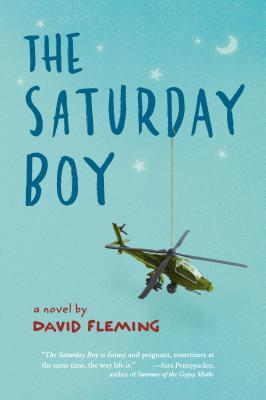
Bob123 says "The book The Saturday Boy [by David Fleming]should be made into a movie because it is really
funny and you never know what will happen. Also, some parts will be
heart touching and emotional just like real life."
Pennywar would like to see "The Grimm Conclusion by Adam Gidwitz because the author described things so well I had a whole "movie" playing in my head. If there was a movie, I could compare my version with the real one."
What do you think? What book do you think should be made into a movie?
Judy Blume tells behind-the-scenes stories of making 'Tiger Eyes' into a movie
June 9, 2013
By: Carla Hay
Judy Blume, Lawrence Blume and Amy Jo Johnson at the "Tiger Eyes" Q&A in New York City, on June 7, 2013
Credits:
Carla Hay
Judy Blume has been a best-selling author since the 1970s, but it wasn't until 2013 that a movie based on one of her novels was finally released. "Tiger Eyes," the movie based on Blume's 1981 book of the same title, tells a poignant coming-of-age story of high schooler Davey Wexler (played by Willa Holland), a sensitive teenager who is grieving over the sudden death of her father. Davey and her mother, Gwen Wexler (played by Amy Jo Johnson), and Davey's younger brother, Jason (played by Lucien Dale), move from New Jersey to New Mexico to start a new life.
While in New Mexico, Davey meets a mysterious young man nicknamed Wolf (played by Tatanka Means), who will change Davey's life forever. On June 7, 2013 (the same day that "Tiger Eyes" opened in limited U.S. release and premiered on demand), Judy Blume, her son Lawrence Blume (who directed and co-wrote the "Tiger Eyes" screenplay) and Johnson did a Q&A after a "Tiger Eyes" screening at the AMC Empire 25 multiplex in New York City. Here is what they said when they took questions from the audience.
Amy, what was your favorite part of filming “Tiger Eyes”? Johnson: First of all, working with Judy Blume. Lawrence was amazing. It was awesome. This was my first time seeing [“Tiger Eyes”]. And also, I loved New Mexico, and I loved Santa Fe. It was such a treat to be there. It was a magical place. Judy Blume: I have to tell a story. Amy Jo got to the set … and had never met any of us and had never met Willa, who played Davey. And there at the top of the mountain mesa canyon, way up high, 50-mile-an-hour winds blowing, the light is dying, it’s freezing and cold, and the rest of us are huddled around heaters. And they [Amy Jo Johnson and Willa Holland] had to play the last scene that you just saw them in, mother and daughter, coming together on a beautiful spring day, never having met. Johnson: In, like, 15 minutes. Judy Blume: Before the light was gone. Not only that, but that was the one day on the set when the money people were there. It was like, “Oh my God, if we don’t get this scene, we’re dead.” We only had three days to shoot all the scenes that happen in the canyon. And it was tough. Considering all the books that you’ve written, why did you choose “Tiger Eyes” when you got a chance to make one of your books into a movie? Judy Blume: There was never any question. Larry and I had talked for years about making “Tiger Eyes.” I think it’s the most cinematic of all of my books. I think the beautiful landscape of New Mexico was an important character in the story.
We lived there. I lived there when I wrote the book. I didn’t know until I saw it finished how much feelings came from the loss of my own father and learning that what he would want most foe me is to go on and to enjoy life to the fullest. Lawrence Blume: Well, I had read the book when Judy had finished it. I was 18 and going off to college … And it sort of knocked my socks off. I didn’t really know this at the time, but I was just very moved by it. It felt like a reflection of my own life because we were living in New Jersey, and then abruptly went to live in Los Alamos, N.M.
So the story of losing your place, your friends, everything, and going a new place and having to start again, I guess it resonated with me. And I thought, “Oh, I’m going to catch it as a movie someday.” And 30 years later, here we are, What was it like to adapt the “Tiger Eyes” book into a screenplay? Judy Blume: When we were talking about doing it, Larry said, “I want it to be as intimate as a first-person book, as one of your first-person books.” I write all these inner monologues because that’s what I like to write. And how do you do that in a movie? And we are very thankful that we have Willa Holland and that expressive face to help tell the story and save pages and pages of inner monologue.
I still heard the gasps when Walter slapped Davey. I’ve probably seen the movie a hundred or 50 times … And let me not leave out my fabulous husband, George Cooper, who came in and saved us and became an executive producer, when we were all out in the canyons and people were yelling and screaming in the office, George did it in his quiet way, and he’s problem solver and solved the problems — we did it together. Lawrence Blume: I try and think a little bit structurally. I tried to pull scenes and pages out of the book. Primarily, my objective was to be as faithful to the book as possible, because I was living in terror that all of Judy’s fans who love the book would say horrible, horrible things and hate me forever. So we tried to be as faithful as possible to try and turn a book into a movie. It’s obviously not the same medium. We tried to everything we could use from the book, every piece of dialogue, every scene. Some of the scenes are verbatim right out of the book. Judy Blume: Which you know. Lawrence Blume: And some things we had to invent or bridge. It was just a process of trying to be as faithful as possible. Judy Blume: To the spirit. Not faithful to every page of the book, but to the spirit of the book and the emotionality of the characters. And let me tell you something: If I were writing this book today, there’s no way in the world I would get rid of Wolf three-quarters of the way into the book. I don’t know what I was thinking, because when I see it now, Wolf, their connection makes the story. Of course, [Davey] kept writing letters to him [in the book], but that’s not visual. So we knew from the start.
And when Larry says a little bit of structure, he’s a lot of structure. He knows structure and I don’t. And I write — well, I don’t know how I write — on instinct. Whatever happens happens. And you can’t do that as much in the movie with a lot of people and relationships and dialogue. And so we worked well together. We don’t work as mother and son. We work as Judy and Larry. Amy Jo, how do you create a level of mother/daughter intimacy with someone you’ve just literally met? Johnson: I don’t know. Maybe it’s from doing years and years of television, which is just so fast-paced. Watching [“Tiger Eyes”], I’m really happy … Maybe it worked because it happened so fast. I don’t know. It worked though. Lawrence Blume: This is a little technical, so I won’t waste a lot of time on it, but that scene, I had this idea to use a crane so we could kind of come down and see the landscape, but then we couldn’t afford a crane. This was a really low-budget movie. So we built a ramp and got a Steadicam, which is a rig that the cameraman holds, and we would walk at the top of the ramp and would walk down as they did their scene. I had to do the whole thing in one take because the sun was going down.
And we only had light for two takes. And you wouldn’t think that in any movies like this that there are any effects shots, but there are actually 20 effects shots in this movie. And that one, we used computer technology to stabilize it. It was a mess ... because of the wind. And for digital technology to turn that into a smooth, beautiful shot, and let the actors shine was kind of incredible. For more info: "Tiger Eyes" movie
March 22, 2012 7-8pm Quigley Youth Room at the Wellesley Free Library
Kids
in grades 6-8 join us in the Youth Room for a Hunger Games Party at the Youth Advisory Board meeting! On
March 22, the night before the movie is released, we will celebrate all
that is Panem with food, games, trivia, and prizes. Come dressed as
your favorite tribute, ready for a night of fun! This program is generously sponsored by the Friends of the Wellesley Free Libraries.
In case there is anybody still left wondering what the film (adapted from Suzanne Collins' books) is about, Jennifer Lawrence stars as Katniss Everdeen, a young woman living in an apocalyptic, ruined future America. With the majority of its citizens living in poverty in rural Districts, she has to hunt to supplement her sister and mother's meagre rations. Then her sister is chosen for the Hunger Games, an annual contest that keeps the fractured country under the iron fist of the technologically advanced Capitol.
The Games pits youngsters from each of the Districts against each other in a battle to the death, so Katniss volunteers to take her sister's place and fight alongside Peeta Mellark (Josh Hutcherson). She'll have to outwit and outfight highly trained Tributes who have been preparing for the games her entire lives. And, as Katniss says in the new trailer, "24 go in, but only one comes out..."
This new promo is a chance to see several of the main cast: Elizabeth Banks, Donald Sutherland, Stanley Tucci, Liam Hemsworth and Lenny Kravitz all feature here.
We get the chance to see the whole thing on March 23.
November 18, 2011
In his 2007 children's book, The Invention of Hugo Cabret, author Brian Selznick tells the story of an orphan named Hugo who lives in the walls of a Paris train station and spends his time winding the clocks.
Now, director Martin Scorsese is coming out with a film adaptation of that book. The film, Hugo, is Scorsese's first 3-D project, and while it marks a creative departure for the man behind The Departed, Taxi Driver and Goodfellas, it still deals with familiar territory. That's because while tracking the story of the young Hugo, the book also tells the story of the early days of filmmaking and the genius of real-life French filmmaker Georges Melies, who is played in the film by Ben Kingsley.
Melies was a magician before he started making movies around 1900. Brian Selznick tells NPR's Melissa Block that his book was inspired in part by Melies' 1902 film A Trip to the Moon, in which a rocket zooms toward a moon with a human face on it.
AP
In Georges Melies' silent film A Trip to the Moon, a group of astronomers travels to the moon in a giant bullet.
"All of a sudden, with a cut of the camera, the rocket goes right into the eye of the man on the moon," Selznick says. "He's got the rocket in his eye, and white goo is kind of coming down where the rocket hit the moon, and he's sticking his tongue out."
That kind of imagery also fascinated Scorsese, who tells Block about his memories of watching Melies' work.
"I was fascinated by the sleight-of-hand concept," Scorsese recalls. "[Melies] saw the potential in these moving images, and these images that came up on the screen ... absolutely took me to another planet."
Melies had a hand in every aspect of his films, Scorsese says, from painting the sets to the costumes to writing the stories to figuring out how to make his ideas work on film. One — perhaps apocryphal — anecdote has Melies discovering the potential of cinematic tricks while shooting the exterior of the Paris Opera. The camera jammed just as a bus was going by, so Melies stopped shooting to fix the problem, then started rolling again. The interruption made it look like the bus simply disappeared from the frame.
"And he said, 'Well, I think I can do that in a studio,' " Scorsese says. "He invented what we do now — blue screen, green screen — he invented all of that."
For his new film, director Martin Scorsese worked to re-create the scenes of Brian Selznick's illustrated children's book The Invention of Hugo Cabret.
Jaap Buitendijk/GK Films
A Child's 'Sense Of Magic'
"If you ever wondered where your dreams come from when you go to sleep at night, just look around," Selznick's Melies tells a young Hugo. "This is where they're made."
Scorsese says Hugo is all about dreams, and as overworked as that idea may be in the movie business, it's particularly appropriate when it comes to a film based on a children's book.
"For children there's always a sense of magic," he says. "There's always a sense of something beyond the natural when you see the images move that way."
And he would know. Scorsese says he has fond memories of visiting friends who owned home movie projectors when he was a boy. "They projected some black-and-white cartoons. It was absolutely extraordinary to see that."
So making a film in 3-D was a natural next step, and one that allowed Scorsese to add depth to scenes of Hugo climbing on the train station's gigantic clock mechanisms.
"It sounds like a cliche, but the idea is that you're in the world with them," he says of his decision to film in 3-D. "When you start telling stories, you want sound, color, a big screen, so to speak, and depth. People have always wanted that, and so for me this was a great opportunity."
There was still a learning curve to using the new technology, but despite all that, Scorsese describes Hugo as one of the most rewarding experiences he's ever had making a film. It also may have helped that the characters in Hugo don't have a lot in common with the characters Scorsese usually works with, who "may not be the nicest people to be around."
"But you know, Taxi Driver in 3-D would have been interesting," he says. Just imagine a 3-D version of Robert De Niro asking a mirror, "You talkin' to me?"
"He'd be talkin' to ya," Scorsese says. "That would be amazing."
Coming December 21st, The Adventures of Tintin is the long-awaited film version of Herge's Tintin graphic novels! The Adventures of Tintin series was created in 1929 by a Belgian artist who called himself Hergé. Clever and ever-curious, Tintin is a reporter-turned-detective whose pursuit of villains, criminals, treasure and the occasional artifact takes him all over the world, along with a colorful cast of friends. Hergé based his stories on real-world events and cultures that had caught the Belgian national attention — from space exploration to Arab oil wars — and brought them to life for his readers in inspiring and exciting ways.
We have multiple copies of all the Tintin books (even the difficult to find The adventures of Tintin,reporter for Le Petit Vingtième, in the Congoand The adventures of Tintin, reporter for Le PetitVingtième --- in the Land of the Soviets!) in our juvenile graphic novel collection; stop by and check some out!


 Bob123 says "The book The Saturday Boy [by David Fleming]should be made into a movie because it is really
funny and you never know what will happen. Also, some parts will be
heart touching and emotional just like real life."
Bob123 says "The book The Saturday Boy [by David Fleming]should be made into a movie because it is really
funny and you never know what will happen. Also, some parts will be
heart touching and emotional just like real life."


