Showing posts with label picture book. Show all posts

Friday, June 12, 2015

Great kids books that teach body literacy

From a young age, children are very curious about their bodies, and this curiosity continues to develop and grow as their bodies do the same!  Developing body literacy, an understanding how their bodies work and a knowledge about their own unique body, is a very important skill to foster, especially as they approach puberty. Below are some of my favorite body books for kids of all ages.  I especially like that all of these books portray all different types of bodies and bodily experiences, representing diversity in many forms so no child feels as though their body is abnormal.


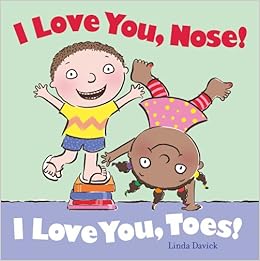
I love you nose! I love you toes! by Linda Davick
Ages 2-5
Our wonderful bodies-aren't they amazing? Come celebrate all the things that make us who we are-from the tops of our heads to the tips of our toes, to our tummies, our freckles, our dimples, our skin, and everything in between! With silly, rhyming text and bold, simple illustrations, this fun and frank approach to exploring body parts provides factual information that is just right for the young reader.

My Nose, Your Nose by Melanie Walsh
Ages 2-6
This book introduces the concept of diversity, but the approach is very gentle: Agnes has blue eyes. Kit’s eyes are brown. But . . . they both close their eyes when they go to sleep.  The close-up and lively illustrations of kids and all their cute bits--eyes, hair, skin, noses, legs--will invite readers to tell what’s unique about themselves. And at the same time, children will see that there’s so much they have in common, too.

The Busy Body Book: A Kid's Guide to Fitness by Lizzy Rockwell
Ages 3-7
A celebration of the amazing human machine and a life on the move! Your amazing body can jump, sprint, twist, and twirl. Your body is built to move.  Lizzy Rockwell explains how your bones and muscles, heart and lungs, nerves and brain all work together to keep you on the go. Kids walk and skate and tumble through these pages with such exuberance that even sprouting couch potatoes will want to get up and bounce around—and that’s the ultimate goal. Studies show that American kids are becoming more sedentary and more overweight and that they carry these tendencies with them into adolescence and adulthood. Experts agree that we need to help kids make physical activity a life-long habit. Through education, information, and encouragement, this book aims to inspire a new generation of busy bodies!
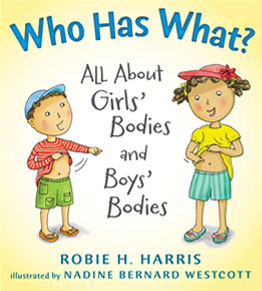
This series for young children provides easy-to-understand facts and answers. Launching the series is Who Has What?, a simple story following Nellie and Gus on a family outing to the beach. Humorous illustrations, conversations between the siblings, and a clear text all reassure young kids that whether they have a girl's body or a boy's, their bodies are perfectly normal, healthy, and wonderful.

Also note Harris' other fantastic books for younger kids: It's not the Stork! and, for a slightly older audience, It's so amazing! : a book about eggs, sperm, birth, babies, and families


Ages 8-10
In her uniquely warm and funny style, Lynda Madaras wrote this entirely new book especially for younger boys to give them everything they need to know about the new and exciting changes that are happening to their bodies during puberty.

Ages 8-10In her uniquely warm and funny style, Lynda wrote this entirely new book especially for younger girls to give them what they need to know to celebrate and accept the new and exciting changes that are happening to their bodies during puberty.

Madaras also has a set of books for older boys and girls (10 and up), entitled "What's happening to my body?"
Ages 8-10
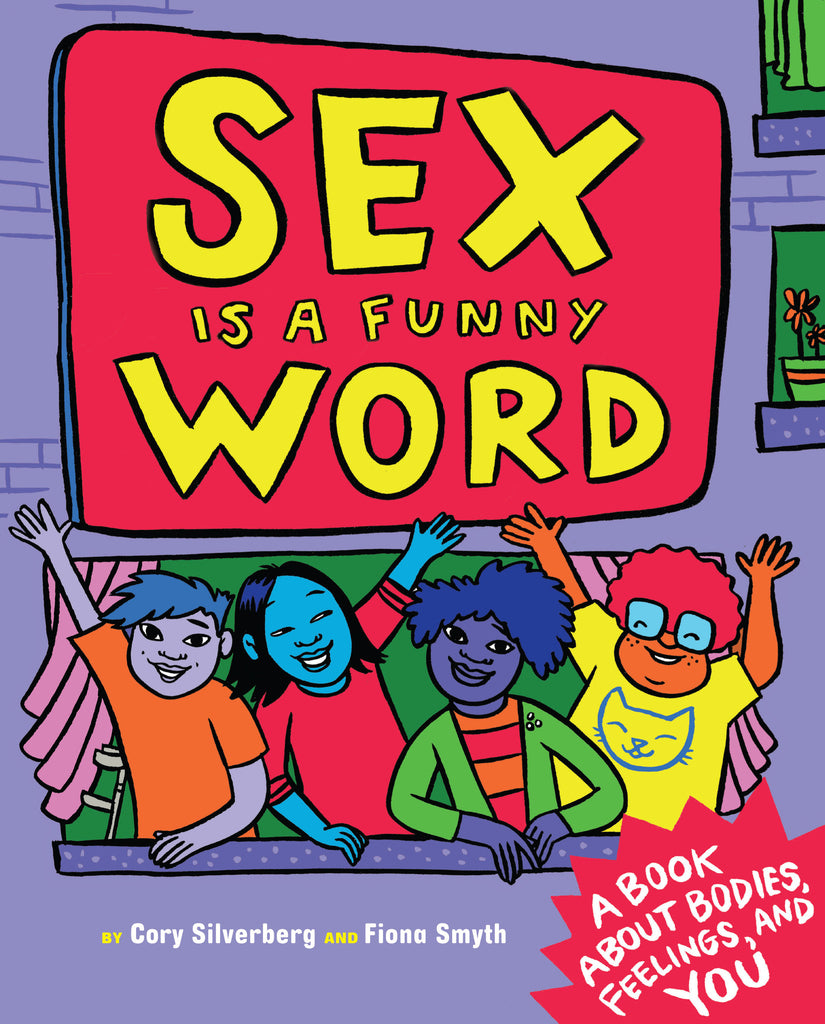
A comic book for kids that includes children and families of all makeups, orientations, and gender identities, Sex Is a Funny Word is an essential resource about bodies, gender, and sexuality for children as well as their parents and caregivers. Much more than the "facts of life" or "the birds and the bees," Sex Is a Funny Word opens up conversations between young people and their caregivers in a way that allows adults to convey their values and beliefs while providing information about boundaries, safety, and joy.

Silverberg also has an award-winning book for slightly younger children about conception, gestation, and birth called What Makes a Baby.

Ages 8-12
The definitive book about puberty and sexual health for today’s kids and teens, now fully updated for its twentieth anniversary. It’s Perfectly Normal has been updated with current and correct information on subjects such as safe and savvy Internet use, gender identity, emergency contraception, and more. Providing accurate and up-to-date answers to nearly every imaginable question, from conception and puberty to birth control and STDs, It’s Perfectly Normal offers young people the information they need — now more than ever — to make responsible decisions and stay healthy.


Friday, December 20, 2013

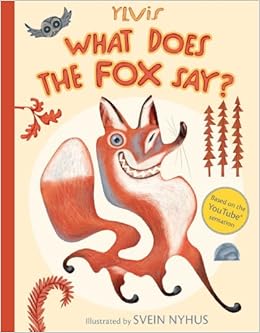
This just in: What Does the Fox Say...the book!

Look what arrived at the library today!  Find it in our catalog.


Ylvis' 'What Does the Fox Say?' Book Tops New York Times Children's Best Seller List

By

Ylvis may not have hit No. 1 in America with sleeper hit "The Fox (What Does the Fox Say?)" but the Norwegian comedy duo has reached the top of a chart after all this year -- this time with its first book.

"What Does the Fox Say?," the children's book based off the duo's sleeper hit of a song, has debuted at No. 1 on The New York Times' Best Sellers List for Children's Books, it was confirmed today to Billboard. The Simon & Schuster-published book, which is in its sixth printing, includes the lyrics to "The Fox" along with illustrations from Norwegian artist Svein Nyuhus.

The No. 1 book, released Dec. 10 and featured in Billboard's 2013 Holiday Gift Guide, is the latest coup for Ylvis, who placed "The Fox" at No. 6 in the U.S. on the Hot 100 after its late summer release. The original music video has been viewed nearly 300 million times on YouTube, reaching the 100 million mark just over a month after its release.

Thus far, the duo has been unable to reclaim the success of "The Fox" with a new single, though the brothers Ylvisaker aren't sweating it much. In an interview posted yesterday (Dec. 18) by The Hollywood Reporter, Bard Ylvisaker said that even if its future endeavors don't go over well in America, "we'll return to our office in Norway and still be happy. Everything's a bonus. And we won't be disappointed if we're kicked out of the country."

http://www.billboard.com/biz/articles/news/record-labels/5847717/ylvis-what-does-the-fox-say-book-tops-new-york-times

Wednesday, November 20, 2013

Our new favorite book!

Alfred Crabtree has lost his false teeth. But don’t worry, he’ll find them if he can just get his things organized! Alfred’s world is cluttered with surprising objects. Some are very uncommon, and some are probably not where they ought to be. There are a lot of pencils and small yapping dogs. There’s a squeeze bottle of mustard, a plunger, a rubber band or two, a few very fancy hats, and a group portrait of sea monsters. There’s an old cassette tape, a swizzle stick, a bicycle pump, and an armadillo shell. Join Alfred on a romp through his far too many possessions and you’ll end up learning more about him than he knows about himself. And maybe he’ll find his teeth in all that stuff!
Praise for Crabtree:
“This book is fantastic in every way.”
—Maira Kalman
“There are so many great things in this book. If you like great things, this is the book for you.”
—Jon Klassen
“An epic tale is hiding among Crabtree’s possessions, and the search for a single object takes on cosmic meaning. Highly recommended.”
—Patton Oswalt
“I have many, many copies of this book in different rooms in my home as part of an ongoing collection of books I like very much all kept in separate rooms for organizational purposes.”
—Lemony Snicket
“A terrific debut! I was completely tickled by this book. Bravo Jon and Tucker Nichols!”
—Jon Agee
“A light-hearted meditation on how we are defined by our possessions, delivered with that trademark McSweeney’s flair.”
The Atlantic Wire
“Witty… [Alfred Crabtree] really has a lot of stuff.”
Kirkus
Photos

Sunday, September 15, 2013

Sophie's Squash


Book List Review
*Starred Review* Who says children don't love vegetables? Sophie certainly does, as her best friend is a yellow squash she has named Bernice. Even though Bernice is supposed to be dinner, Sophie draws a smiling face on her and convinces two very tolerant parents to let her keep the gourd as a playmate. The two have tea parties, somersault down the hill, go to library storytime, and have sleepovers. As the summer wanes, Mom is always exploring new recipes for cooking Bernice before she rots away altogether. Don't listen, Bernice! Sophie cries in terror, shielding her friend. In the fall a blotchy Bernice seems softer and her somersaults lacked their usual style, so Sophie plants her in the garden. In a perfect blend of story and art, the humorous watercolor-and-ink illustrations are bursting with color and energy on every page, replete with patterns in swirls, stripes, florals, and polka dots appearing on clothing, curtains, and upholstery. Endpapers depict the pigtailed Sophie with her jaunty red bows in constant motion running, tossing, flipping, cuddling, and balancing the squash. This is a paean to love and friendship, which can come in all species, shapes, and sizes.--Gepson, Lolly Copyright 2010 Booklist

Wednesday, September 4, 2013

Rufus Goes to School by Kim Griswell

From Booklist


Does Rufus Leroy Williams III ever want to go to school! Sure, he is a piglet, but he has got a beloved picture book, and he wants to be able to read it. After observing human students, he figures out what he needs to be admitted: a backpack! Suitably backpacked, Rufus is taken before the principal, who shuts him down. “Because pigs track mud in the halls,” he says. “They play leapfrog in class, and they start food fights in the cafeteria.” Next Rufus acquires a lunch box and then a nap-time blanket, but the principal maintains that pigs disrupt school in a dozen different ways. It is only when Rufus reveals that he wants to learn to read that the principal reconsiders. Griswell’s list of imagined pig offenses is hilariously random (apparently pigs like to knock over block towers, leave nose prints on the windows, etc.), and each trespass is painted by Gorbachev with a maximum of pink, potbellied cuteness. The final pages take an odd sidestep into the inspirational, but otherwise this is a pure porcine pleasure. Preschool-Grade 1. --Daniel Kraus


"A warm, gently humorous story for kids who are looking to school with anticipation, not trepidation." —Publishers Weekly

Thursday, August 22, 2013

Our new favorite book: Gus, the Dinosaur Bus by Julia Liu

From School Library Journal

PreS-K-When a long-necked dinosaur serves as the bus, none of the kids want to miss school. Though everyone loves Gus-the city even builds a special road just for him-the principal finally tires of complaints about him knocking down traffic lights and getting tangled in phone wires and removes him from the road. Relegated to the school gym, Gus makes a swimming pool with his tears and finds a new life as the school's playground, with a swing on his tail and his long neck serving as a slide. In tone and visual details, this gentle story is reminiscent of Syd Hoff's classic Danny and the Dinosaur (HarperCollins, 1958). Lynn's scratchy, childlike watercolor and pencil cartoons have a daydreamy quality that suits Liu's simple text. Gus's story holds universal appeal; even a dinosaur can learn to turn lemons into lemonade.-Kathleen Kelly MacMillan, Carroll County Public Library, MDα(c) Copyright 2013. Library Journals LLC, a wholly owned subsidiary of Media Source, Inc. 
 

Review

"In tone and visual details, this gentle story is reminiscent of Syd Hoff's classic Danny and the Dinosaur. . . . Gus's story holds universal appeal; even a dinosaur can learn to turn lemons into lemonade."
School Library Journal
"The story's mild suspense is just right for the book's audience. . . And the kindly pea-green dino steals the show with his huge smile and even bigger heart."
The Horn Book Magazine

Friday, June 28, 2013

Little Owl's Orange Scarf by Tatyana Feeney --- Kirkus Review

KIRKUS REVIEW

Cover art for LITTLE OWL'S ORANGE SCARF

A little owl struggles with accessory problems.
Little Owl lives with his Mommy in a tree house on the edge of the city park. He loves all the things little owls usually love: doing arithmetic, eating ice cream and riding a scooter. There is one flaw in this idyllic scenario: He does not love his new scarf. It is too long, too orange and too itchy. His mother insists that he wear it. He does his best to surreptitiously “lose” the scarf, by using it as a ribbon for a present for Grandpa and by putting it in a suitcase bound for Peru, but Mommy always seems to find it. Until one day…Little Owl returns from a trip to the zoo, minus the hated scarf. This piece of bad luck turns out to be an opportunity for a bit of mother-child bonding. This time, Mommy lets her son choose the yarn for a new scarf, a tasteful blue, and Little Owl is much happier. The new scarf is soft, the right length and not orange. The mystery of where the orange scarf went is revealed in the last picture, sure to elicit chuckles. Feeney’s naĂ¯ve pencil-and-duotone illustrations, which use printmaking techniques to add interesting textures, complement the simple narrative and gentle message; both pacing and subtle adjustments to Little Owl’s expression add humor.
A charming picture book for the very young, whether or not they are fussy about clothes. (Picture book. 3-5)
Pub Date: June 11th, 2013
ISBN: 978-0-449-81411-6
Page count: 32pp
Publisher: Knopf
Review Posted Online:
Kirkus Reviews Issue: May 1st, 2013

Wednesday, June 26, 2013


Are you wild about horses?  Stop by the children's room and browse our new high-demand horse book bin!  A mix of fiction and non-fiction, titles include A Very Young Rider by Jill Krementz, Ponyella by Laura Numeroff, Noni the Pony by Alison Lester and A Friend for Einstein: the smallest stallion by Charlie Cantrell and Rachel Wagner.

Saturday, June 22, 2013

The Favorite Daughter by Allen Say

KIRKUS REVIEW

When an episode of teasing makes Yuriko doubt herself—her name, her heritage, her interests—her father gently guides her back to her roots and herself.
For a school assignment, Yuriko brings in a photograph of herself in a cherished kimono. When she comes home, her excitement has changed to despondence. Her classmates laughed and told her that Japanese dolls have black hair, while Yuriko is blonde. Then the new art teacher mispronounces her name and assigns a subject Yuriko has depicted in art before. In response, Yuriko impetuously declares she should now be called Michelle, and Michelle does not like art. Her father listens carefully and cleverly takes Yuriko to revisit the things she loves: her favorite restaurant for sushi and the Japanese Garden in Golden Gate Park. Illustrated with spare, clean watercolors, there is subtlety in this tale that’s told almost completely through the dialogue between father and daughter. Some will identify with the cultural details that ground the tale; all will relate to how teasing makes Yuriko feel uncertain about the very things that make her unique. Yuriko does some critical and creative thinking about her identity and her art, proving herself her father’s original—and favorite—daughter.
This is as much a story about cultural pride as it about self-esteem and problem-solving, from which all can draw a lesson. (Picture book. 5-8)
 
Pub Date: June 1st, 2013
ISBN: 978-0-545-17662-0
Page count: 32pp
Publisher:
Levine/Scholastic
Review Posted Online:
Kirkus Reviews Issue: April 15th, 2013

Friday, June 7, 2013

Water in the Park and other books for a rainy day from The New York Times

Splish Splash

‘Water in the Park,’ by Emily Jenkins, and More

In "Water in the Park," a storm arrives at the end of a long, hot day.

Published: May 31, 2013   
 
 
“Rain, rain, go away.” Kids have always chanted the familiar refrain — gazing out the window wistfully, chin on fist — as if they had the power to make it happen. But these days, what’s a little precipitation when there are peevish birds to be flung and other indoor, on-screen distractions? In an era in which the directive “Go play” no longer implies “outside,” the idea that rain may affect a child’s fun is perhaps a quaint one. But four new picture books remind us that no matter how cosseted we are by technology, a downpour still holds the power to move us.

RAIN!

By Linda Ashman
Illustrated by Christian Robinson
32 pp. Houghton Mifflin. $16.99. (Picture book; ages 4 to 8)

WATER IN THE PARK

A Book About Water and the Times of the Day
By Emily Jenkins
Illustrated by Stephanie Graegin
40 pp. Schwartz & Wade. $16.99.(Picture book; ages 3 to 6)

THUNDERSTORM

Written and illustrated by Arthur Geisert
32 pp. Enchanted Lion. $17.95. (Picture book; ages 4 to 8)

BOOM!

By Mary Lyn Ray
Illustrated by Steven Salerno
40 pp. Disney-Hyperion. $16.99. (Picture book; ages 3 to 7)


Two very different attitudes about the weather go head-to-head in Linda Ashman’s buoyant “Rain!” All furrowed brow and put-upon frown, an older, balding man grumps “Rain!” at the drops he sees outside his window. Meanwhile, in another apartment building, a little boy throws his arms up and delights at the “rain!” plinking on the fire escape. As the two go about their respective days — the boy with his green froggy hat and cheery disposition, the man with his pessimistic attitude — their moods are reflected in their environments and in the faces of the people they encounter. Christian Robinson, whose illustrations for “Harlem’s Little Blackbird,” by RenĂ©e Watson, made for a winsome debut last year, uses paint and collage to render the man’s home in muddy colors; the boy’s room, by contrast, has buttery yellow walls and circus polka dots. Everyone the man meets is soured by the experience, as shown by a downturned mouth here, an aggrieved expression there. The boy, on the other hand, spreads metaphorical sunshine, prompting enthusiastic waves and indulgent smiles. When the two inevitably cross paths, it’s no surprise the boy’s positive outlook wins over the grouch — eventually — but their interaction still feels fresh and natural. By the time the man returns to his apartment building, the sun is out; but the implication is that, having embraced the boy’s viewpoint, he’d be happy either way.
Unlike Ashman’s story, in which rain drives the plot, “Water in the Park” showcases a sweltering summer day, and the storm arrives only in the final few pages. But water is everywhere: from the pond in which a small fleet of dogs goes splashing, to the hoses volunteers use to nourish thirsty flower beds, to the pails that industrious children fill from sprinklers and pour onto slides. In an author’s note, Emily Jenkins says she was inspired by the various ways she saw people and animals use water during one punishing Brooklyn summer. Her story’s characters are as diverse as their real-life counterparts in Prospect Park: multiracial families headed by straight or gay parents; nannies and their charges; an elderly couple who’ve not only grown to look like each other but who also resemble their stoop-shouldered, geriatric dog. Stephanie Graegin’s pencil-and-ink washes depict more than a hundred individuals (go on, ask your child to count them), and several recur throughout the book, just as you might run into a neighborhood friend. Jenkins taps out the day’s rhythm in clear, unadorned prose, as early-walking dogs give way to midmorning babies, who then make room for adults on lunch break and the after-school crowd, and onward until the skies open up at dusk.
While the average evening storm is rarely more than a nuisance for most city dwellers, farmers, typically, are far more vulnerable to capricious nature. It’s this exposure that drives the story in the wordless “Thunderstorm.” The illustrator Arthur Geisert grew up in Los Angeles, lived for many years in Galena, Ill., and now makes his home in rural Iowa. He may be best known for his anthropomorphized pigs, seen most recently in “Ice” and “The Giant Seed,” but his new work is more in the spirit of 2010’s earthy “Country Road ABC,” in which “E” stood for Erosion and “I” for Inoculate. “Thunderstorm,” too, is grounded in the real world, down to the time stamps that mark a squall’s progress across Midwestern farmland over the course of one Saturday afternoon. The artist’s trademark copperplate etchings, tinged with watercolors, lend a timeless feel to his slice-of-life illustrations, which show how a farm family and various animals weather the storm. Though the story line isn’t always easy to track — Whose fence is being torn up? And where did that tornado come from? — each page’s abundant details invite lingering and repeated visits. Cutaways reveal where foxes have burrowed for shelter, and offer a glimpse into the farmhouse kitchen, where the family warily eyes the leaking ceiling. Geisert allows the storm to do real damage, but he also shows the community getting to work once the skies clear, determined to set things right.
“Boom!” tells a more finite story, and one many children will relate to. Pert-nosed Rosie is a brave little dog. She gamely faces down tigers (well, a stuffed toy one) and house cats, and fears neither sudsy baths nor roaring vacuum cleaners. But the first crack of thunder sends her whimpering for comfort from, as Mary Lyn Ray affectionately describes him, “the boy she knew best.” Though plenty of pups cower under the sofa when a storm rages, Rosie seems to be as much reader (or one-being-read-to) surrogate as pet. While the unnamed boy tries to explain away the noise with fanciful stories — “Thunder was watermelons rolling from a watermelon truck” or “a block fort falling” — the way a parent might, Rosie knows what’s really happening. “It was the big, big sky growling big, big growls,” she determines, and though she tries, she can’t find a place where she feels truly safe. Eventually the boy scoops her up in his arms and they wait it out together; she imagines “the boy may have felt a little frightened, too,” though the serene look that Steven Salerno has drawn on his face belies that notion. At story’s end, the sun shines once more, Rosie yaps happily and the storm is but a memory, except for a few wooden blocks (perhaps from that aforementioned fort) strewn across the floor. In other words, this too shall pass.
Carolyn Juris is associate children’s book editor at Publishers Weekly.


Thursday, June 6, 2013

Tadpole's Promise by Jeanne Willis and Tony Ross


From School Library Journal


Starred Review. Kindergarten-Grade 4–Beginning with pages that open vertically instead of horizontally, this tongue-in-cheek tale takes a typical love story and sets it squarely–and amusingly–on end. Ross's vibrantly hued pen-and-ink and watercolor cartoons depict the edge of a pond where a caterpillar and a tadpole meet and fall in love: "She was his beautiful rainbow, and he was her shiny black pearl." Perched on a leaf above the water, she smiles down at her sweetheart and asks him to "Promise you'll never change." Although he agrees, some vows are difficult to keep, and when they next meet, he has sprouted two legs. She forgives him, but after he breaks his promise twice more and now looks more like a frog than her "shiny black pearl," the lovelorn larva ends the affair and cries herself to sleep (sequestered in a cocoon). Meanwhile, the melancholy frog sulks around the pond, making heart-shaped air bubbles that rise to the surface and burst. When the caterpillar awakens, now a butterfly, she decides to forgive her beloved and flies above the water to find him. Without a thought, the frog swallows her whole, and then returns to wondering about whatever happened to his "beautiful rainbow." Willis strikes the perfect balance between the deadpan telling and the humorously overblown dialogue shared by the star-crossed pair, while the artwork masterfully enhances each and every nuance. Enjoy this funny story on its own merits or try using it to lighten up a science lesson.–Joy Fleishhacker, School Library Journal
Copyright © Reed Business Information, a division of Reed Elsevier Inc. All rights reserved. --This text refers to an out of print or unavailable edition of this title.


"Beginning with pages that open vertically instead of horizontally, this tongue-in-cheek tale takes a typical love story and sets it squarely and amusingly on end. Ross's vibrantly hued pen-and-ink and watercolor cartoons depict the edge of the pond where a caterpillar and a tadpole meet and fall in love. . . Willis strikes the perfect balance between the deadpan telling and the humorously overblown dialogue shared by the star-crossed pair, while the artwork masterfully enhances each and every nuance.'  —School Library Journal


"Breaks the mould in form as well as content."  —Sunday Times


Saturday, May 18, 2013

Bernard Waber 1924-2013 from Pubisher's Weekly

Bernard Waber, 1924-2013

Bernard Waber.

Children’s author-illustrator Bernard Waber, creator of much-loved picture books about Lyle the crocodile and other anthropomorphic animals, died on May 16. He was 88.
Waber was born in Philadelphia on September 27, 1924, and grew up in the City of Brotherly Love. Though he enjoyed drawing when he was a child, he didn’t consider an art career early on. Waber entered the University of Pennsylvania to study finance, but after his first year, left school for a stint in the Army during WWII (1942-1945). In a biographical essay, Waber stated, “Returning to civilian life, I discarded high finance for enrollment at the Philadelphia College of Art. It was a decision I never regretted.” He studied an additional year at the Pennsylvania Academy of Fine Arts. Upon graduation from art school in 1951, Waber moved to New York City with his new wife Ethel to pursue a career in commercial art. As he told author/editor Anita Silvey in her 1995 book Children’s Books and Their Creators: “True confession: I did not set out to be an author. I began professionally as a designer and illustrator for magazines. My illustrations tended toward whimsy, and my love of drawing animals led to this fatal attraction – children’s books.”
Various magazine art directors suggested to Waber that some of his drawings might be right for children’s books, a vote of confidence that spurred him to mail some samples to publishers. Houghton Mifflin published his first book, Lorenzo, about a curious fish, in 1961. Waber has said that his fondness for New York and for his and Ethel’s first home in that city inspired The House on East 88th Street (1962), the book in which Lyle, the popular crocodile, is discovered in the Primm family’s bathtub. In addition, Waber shared in various interviews that reading aloud to his own three children, and accompanying them to the children’s room at the library, were other catalysts for his immersion in the world of children’s literature.
Wordplay, humor, sensitivity, and his signature comic-influenced drawings are the hallmarks of Waber’s more than 30 books for children. In 2002, Waber’s book Courage received warm reviews as a picture book that served as a springboard for discussions about coping with challenges of all sizes, including the tragic events of September 11. Waber said in an interview with his publisher that he had been working on the book idea for a long while, but felt new purpose about it in wake of that historic day and wanted to include a policeman and fireman in the book.
Waber suffered from macular degeneration later in his career and had been unable to draw for several years due to the eye disorder. But in 2010 Waber collaborated with his daughter Paulis, also an artist, to create Lyle Walks the Dogs, in which Lyle masters a new job: dog walker. The elder Waber frequently described Lyle’s features and feelings to Paulis and was able to see her artwork through magnifying equipment during the book-making process, according to Houghton Mifflin.
Betsy Groban, svp and publisher of Houghton Mifflin Harcourt’s Children’s Book Group, offered this remembrance: “Bernie Waber has been a cherished member of the Houghton Mifflin Harcourt family for decades, and those of us who knew and worked with him are devastated by his death. His warmth, energy, artfulness, elegance, and abiding respect for children were epitomized in his books. The lovable and debonair crocodile, Lyle, made his debut in the classic The House on East 88th Street, and immediately became a favorite of children everywhere. It was followed by the further adventures of Lyle, Lyle, Crocodile, Ira Sleeps Over, and Courage, among many others. Bernie’s gentle and urbane spirit will live on in the many books for children that we are honored to have published.”
Three of Waber's more than 30 books for children.

Thursday, May 9, 2013

I Scream Ice Cream! by Amy Krouse Rosenthal and Serge Bloch

 http://library.minlib.net/search/?searchtype=t&SORT=D&searcharg=i+scream+ice+cream&searchscope=39


KIRKUS REVIEW

This playful collection of 14 ingeniously illustrated “wordles” introduces readers to homophones.
Opening with a definition of wordles as “groups of words that sound exactly the same but mean different things,” the text immediately offers examples “I scream/ice cream” and “heroes/he rows.” Commencing the game, it challenges readers to guess the second wordle of each subsequent pair before turning the page. Guessing “rain, dear” for “reindeer” may be obvious, but other wordles prove more challenging. Guessing “icy” for “I see” is not a stretch, but a second option of “Aye, sea!” may be, without the visual context of a pirate ship. Indeed, the zany, clever multimedia illustrations, with their deceptively childlike figures drawn in stark, black outlines, create a humorous visual context for each wordle, spinning surprising links between verbal juxtapositions. “A family affair” is visually represented by a line of people wearing assorted headgear. Its wordle, “a family of hair,” is visually cued with the same line of people raising their chapeaux to reveal wild hair. Likewise, the illustration for “princess cape” of a creepy princess in a cape trying to kiss a knight tied up in yarn is followed by the wordle “prince escape,” showing the foiled princess throwing up her arms as the knight’s foot disappears through a door.
Witty wordplay guaranteed to tease and tickle. (Picture book. 5 & up)

Friday, February 15, 2013

New foreign language picture books!

The Wellesley Free Library just received a batch of new bilingual picture books in Hindi, Gujarati, and Tamil!  Come and check them out in our foreign language section!
Brown Bear, Brown Bear, What Do You See? in Hindi and English (English and Hindi Edition)   

Thursday, February 14, 2013

A book for Valentine's Day!

From Publisher's Weekly

Part concept book and part poem, this eye-catching picture book is a reassuring valentine for any day of the year. Despite the emphasis on shapes, Sperring (The Sunflower Sword) isn’t offering an introduction to circles, squares, and triangles: “This is the shape that we are./ The shape of you and me,” he writes, as the opening spread shows two smiling figures—one large, one small—in white silhouette, defined by a sea of colorful shapes that surround them. A focus on bodily shapes continues (“This is the shape of my hand,/ the hand you hold on to”), serving as an entry into related objects and settings (a spread about food follows one about mouths; a look at feet and shoes paves the way for a scene featuring vehicles). Debut illustrator Paterson fills the pages with crisp and colorful objects, often accented with sound effects (a friendly dinosaur offers a gentle “raaaa,” birds chirp and tweet). It’s a lovingly designed and visually appealing portrait of the places, animals, and objects common to a child’s world, with the invisible but perceptible adult presence hovering in the background. Ages 2–5. (Jan.)
Reviewed on: 11/19/2012


Tuesday, February 12, 2013

Focus on Caldecott!

The Caldecott Medal was named in honor of nineteenth-century English illustrator Randolph Caldecott. It is awarded annually by the Association for Library Service to Children, a division of the American Library Association, to the artist of the most distinguished American picture book for children.


2013 Medal Winner

This Is Not My Hat by Jon KlassenThe 2013 Caldecott Medal winner is This Is Not My Hat, written and illustrated by Jon Klassen, published by Candlewick Press.
In this darkly humorous tale, a tiny fish knows it’s wrong to steal a hat. It fits him just right. But the big fish wants his hat back. Klassen’s controlled palette, opposing narratives and subtle cues compel readers to follow the fish and imagine the consequence.
“With minute changes in eyes and the slightest displacement of seagrass, Klassen’s masterful illustrations tell the story the narrator doesn’t know,” Caldecott Chair Sandra Imdieke said.

2013 Honor Books

Creepy Carrots book cover
Creepy Carrots!, illustrated by Peter Brown, written by Aaron Reynolds and published by Simon & Schuster Books for Young Readers, an imprint of Simon & Schuster Children’s Publishing Division
Jasper the rabbit loves carrots until he notices they are everywhere. He is convinced they’re coming for him! Pronounced shadows, black borders and shaded edges enhance this ever so slightly sinister tale with a distinctly cinematic feel. This is one serving of carrots children will eagerly devour.


Extra Yarn book cover
Extra Yarn, illustrated by Jon Klassen, written by Mac Barnett and published by Balzer + Bray, an imprint of HarperCollins Publishers
A selfish archduke threatens to halt a little girl's transformation of a colorless town and steal her box of magical yarn. Klassen's innovative digital technique results in shifts of color that signal character change and critical turns of plot -all done with just the right stitches of humor.


Green book cover
Green, illustrated and written by Laura Vaccaro Seeger and published by Neal Porter Books, an imprint of Roaring Brook Press
In this original concept book, Seeger engages all the senses with her fresh approach to the multiple meanings of “green.” Using thickly-layered acrylics, word pairings and cleverly placed die cuts, she invites readers to pause, pay attention and wonder.


One Cool Friend cover
One Cool Friend, illustrated by David Small, written by Toni Buzzeo and published by Dial Books for Young Readers, a division of Penguin Young Readers Group
Energetic line and dizzying perspective combine for a rollicking tale of Father, Elliot and a highly improbable pet (or two). Buzzeo’s text, brimming with sly wordplay, earns its perfect counterpoint in Small’s ink, watercolor and pencil illustrations with chilly details and visual jokes that invite many repeated readings.


Sleep Like a Tiger book cover
Sleep Like a Tiger, illustrated by Pamela Zagarenski, written by Mary Logue and published by Houghton Mifflin Books for Children, an imprint of Houghton Mifflin Harcourt Publishing Company
Surrounded with dreamlike images of crowns, ornate patterns and repeated visual motifs, her parents coax her into bed. Using mixed media artwork on wood enhanced with computer illustrations, this is a whimsical story with universal appeal.


Members of the 2013 Caldecott Medal Committee are: Chair Sandra J. Imdieke, Ph.D., Northern Michigan University,Marquette, Mich.; Elise DeGuiseppi, Pierce County Library System, Tacoma, Wash.; Kerry J. Gleason, Wilmington (Del.) Institute Library; Sarah J. Howard, Daniel Boone Regional Library, Columbia, Mo.; Nancy J. Johnson, Ph.D., Singapore American School; JoAnn M. Jonas, San Diego County Library; Dr. Melanie D. Koss, Northern Illinois University, Department of Literacy Education, DeKalb; Wendy Lukehart, District of Columbia Public Library, Washington, D.C.; Dr. Miriam Martinez, University of Texas at San Antonio; Dr. Claudette S. McLinn, Center for the Study of Multicultural Children’s Literature, Inglewood, Calif.; Kiera Parrott, Darien (Conn.) Library; Carol Hanson Sibley, Minnesota State University, Moorhead, Minn.; Michelle M. Willis, Scotch Plains (N.J.) Public Library; Maida Wong, South Pasadena (Calif.) Public Library; and Dr. Nancy P. Zimmerman, University of South Carolina, School of Library and Information Science, Columbus, S.C.
The Newbery and Caldecott Medals and Honor Book seals are property of the American Library Association and cannot be used in any form or reproduced without permission of the ALA Office of Rights and Permissions.

Friday, January 25, 2013

Teddy Bear Display!


Come in and see our new bear display, featuring Steiff  teddy bears and picture books by Dare Wright!


For more information about Dare Wright and her Lonely Doll books, go to http://www.darewright.com/


 Dare Wright books featuring bears:
  • The Lonely Doll. Doubleday, (1957)
  • Holiday for Edith and the Bears. Doubleday, (1958)
  • The Little One. Doubleday, (1959)
  • The Lonely Doll Learns a Lesson. Doubleday, (1961)
  • Edith and Mr. Bear. Random House, (1964)
  • Take Me Home. Random House, (1965)
  • A Gift from the Lonely Doll. Random House, (1966)
  • Edith and Big Bad Bill. Random House, (1968)
  • Edith and Little Bear Lend a Hand. Random House, (1972)
 

Saturday, January 19, 2013

Fluff and Billy by Nicola Killen --- a new favorite!

I'm climbing up! said Fluff.

I'm climbing up! said Billy.

I'm sliding down! said Fluff.

I'm sliding down! said Billy.

Meet Fluff and Billy, two of the most irresistible, adorable penguins ever. They're best friends, and whatever Fluff does, little Billy does too: climb, slide, swim, splash, run, and jump. Together, they have fun in their enchanting polar world --- until something happens that rocks their friendship. Children --- and parents too --- will instantly recognize and relate to this familiar situation, and rejoice in how the penguin pals resolve their conflict.