Showing posts with label movie. Show all posts

Monday, August 4, 2014

Books into movies!

It seems like every other day a kids or teen book is made into a movie!  But, of course, some are left out.  Here are Wellesley's rising 6th graders' takes on what books they wish would be made into movies!

Andrew2014 would like to see "The Twits by Roald Dahl because I would like to see if the movie producer changes the story line in any way and the book is already really funny so I would like to see if the movie plot line is more or less funny."


Henry2014 would like to see I Represent Sean Rosen by Jeff Baron "because it would be great to see Sean pretending to be his own manager and trying to get his movie made."


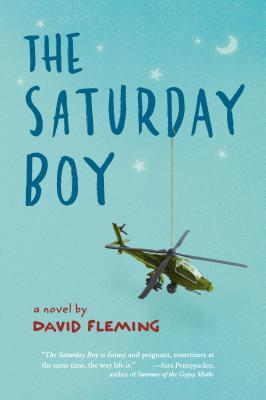
Bob123 says "The book The Saturday Boy [by David Fleming]should be made into a movie because it is really funny and you never know what will happen. Also, some parts will be heart touching and emotional just like real life."


Pennywar would like to see "The Grimm Conclusion by Adam Gidwitz because the author described things so well I had a whole "movie" playing in my head.  If there was a movie, I could compare my version with the real one."


What do you think?  What book do you think should be made into a movie?

Thursday, April 12, 2012

Two Short Fables That Revel in Freedom

Two Short Fables That Revel in Freedom


Published: November 11, 2007
ALBERT LAMORISSE’S “White Mane” (1953) and “The Red Balloon” (1956) are among the world’s most famous and most honored films for children. Both were prizewinners at Cannes, and “The Red Balloon,” which is 34 minutes long and contains about half a dozen lines of dialogue, improbably received an Oscar for its screenplay. But kids’ stuff they are not.
Everett Collection
Pascal Lamorisse, the son of the filmmaker Albert Lamorisse, in “The Red Balloon” from 1956.
The stories are simple, fablelike; the heroes are boys; the subject in each case is the purity and power of a child’s imagination; and the tone of both films is that of open-mouthed wonder. Yet these movies are also shot through with a very adult melancholy, an awareness that life tends not to measure up to the glorious pictures in our minds. The young are enchanted by “White Mane” and “The Red Balloon.” Grown-ups, who know too well how fragile this beauty is, are likely to cry.
There has recently been a long overdue surge of interest in Mr. Lamorisse’s two great films, some of it sparked by the estimable Taiwanese director Hou Hsiao Hsien, whose feature-length homage, “Flight of the Red Balloon,” was screened at the New York Film Festival this fall. And starting Friday “White Mane” and “The Red Balloon” will be shown on a double-bill at the Film Forum in Manhattan, in superbly restored prints. “White Mane” also has a new English-language narration by Peter Strauss, which is a more scrupulous translation of the original French than previous versions. (The earliest, written by James Agee, is gorgeous, but — not surprisingly — a good deal more verbose than Mr. Lamorisse’s spare text.)
The most striking benefit of the restorations, though, is the delicate color of “The Red Balloon,” which heightens the contrast between the muted loveliness of Paris streets (it always looks like first light, somehow) and the bold, stunningly incongruous red of the title object. In a less vibrant print “The Red Balloon” would still be touching and ingenious, but it wouldn’t be half as funny.
If you haven’t seen the film since attaining the age of reason, you might have forgotten how dryly brilliant its (mostly) silent comedy is: Mr. Lamorisse times the balloon’s entrances and exits from the frame with the precision of a crack farceur.
At the beginning of the movie a schoolboy (played by Pascal Lamorisse, the filmmaker’s son) happens on a large, fortuitously untethered balloon, and, knowing a good thing when he sees one, grabs the string and claims it as his own, as if it were a stray mutt. (Or — to cite a movie that, 25 years later, took possession of the spirit of “The Red Balloon”— as if it were E. T.) Pascal then discovers, to his delight, that his new toy/pet is eminently trainable. He teaches it to follow him, off string, and to wait faithfully for him when he’s at school, on a bus or in one of the many other places where big balloons are not welcome.
The movie is essentially a series of elegant slapstick routines, in which the balloon — which has its mischievous side — darts or bobs or soars, as the situation requires, and gets laughs from the constant surprise of its appearances and disappearances. The sheer absurdity of giving a balloon the personality of a friendly, frisky dog is, of course, central to every one of Mr. Lamorisse’s gags, and it’s a conceit that could easily have become mighty tiresome. But he knows enough to keep the action brisk and the movie short, and he doesn’t press his luck by treating us, as a lesser artist might, to close-ups of his small hero’s happy face. Everything in “The Red Balloon” happens, as it should in physical comedy, in long and medium shots: no special pleading, no unseemly appeals for the viewer’s approval.
When the film is over, you realize that although you’ve been entirely enveloped in little Pascal’s fantasy world, you’ve learned next to nothing about the boy himself. His parents are not in evidence. He lives with a stout, black-clad, rather fearsome-looking old woman who may or may not be his grandmother. We’re given no idea whether he’s a good, bad or indifferent student, or who his friends are. The intensity of his attachment to the balloon suggests that he’s a lonely, dreamy child, living in his own head, but we can’t be sure; the movie gives us nothing solid to go on.
With such a skimpy back story the film runs the risk of abstraction, but Mr. Lamorisse’s reticence has the odd, bracing effect of making everything he chooses not to show us seem deeply irrelevant. All that matters here are the balloon, the boy (whoever he is) and the steep, narrow streets of Ménilmontant, where they play together.
Just how unnecessary the particulars of the boy’s “real” (i.e. nonballoon) life really are is emphasized, inadvertently, by Mr. Hou’s “Flight of the Red Balloon,” which will be released theatrically in the spring. That movie’s boy, named Simon (Simon Iteanu), has real life to burn, a messy one with a frazzled single mother (played by Juliette Binoche) in a cramped apartment. And when a red balloon enters this boy’s life, courtesy of the young Asian film student (Song Fang) who has been hired as his nanny, the contrast between his imaginative world and the world he actually inhabits feels, with all this extra detail, too pointed; Mr. Hou manages to keep poignancy at bay, but it’s touch and go.
We don’t know much, either, about the boy named Folco (Alain Emery) whose story is told in “White Mane.” He comes from a family of fishermen in the marshy southwestern region of France called the Camargue, where wild horses roam in packs. His household consists of a bushy-bearded, unidentified elderly gent and a little brother (Pascal Lamorisse, a toddler then). The lone important fact about Folco, as far as Mr. Lamorisse is concerned, is his relationship with White Mane, the alpha stallion of the herd, who, the narrator tells us, doesn’t like men but who comes to trust this boy. In a way this 39-minute, black-and-white movie is a draft of “The Red Balloon”: the unrulier, more disturbing story of which the later film is a charming, whimsical variation
“White Mane” is no less carefully composed than its better-known successor: both pictures have the economy, the clarity of purpose and the pleasing symmetry of a sonnet. For Albert Lamorisse, who began and ended his career as a documentary filmmaker, the difference lies in the landscape. A metaphorical balloon would make no more sense (even comic sense) in the Camargue than an untamed stallion would in the streets of Paris; and although both, in their respective films, represent the freedom of the imagination and both, consequently, have enemies, the threat feels much graver in “White Mane.” The envious boys with slingshots who chase down Pascal’s balloon are almost parodies of the fierce-looking riders of the Camargue pursuing White Mane for the worst and commonest reason — for the awful joy of breaking a creature freer than they are.
As Folco rides the horse, bareback, across the marshes, over the dunes and through the strange, sparse, gnarled vegetation of his native region, you sense, as in few other films, the real terrors of nature, its arbitrariness and flat indifference reflected in the very changeability of its beauty. (Compared with this, both the attractions and the dangers of the city seem like child’s play.)
It takes an extraordinary filmmaker to evoke that sort of feeling and then to cap his thrilling climactic chase with an image as ecstatic as it is disquieting, the distant sight of a boy and a horse heading out to sea. “The Red Balloon” ends with a similar flourish of ambiguous release, but it is, appropriately (and literally), a lighter one.
And Lamorisse, these movies show, really was a remarkable artist: one of the cinema’s best poets and a fearless explorer of the scary and exhilarating outbacks of the imagination. He lived for 14 years after “The Red Balloon,” mostly making documentaries. While he was shooting what would be his last picture, “The Lovers’ Wind,” in Tehran in 1970, his helicopter crashed; he was 48. Even he might not have been capable of imagining a more fitting end: He rose to get a clearer, freer view of the world, and fell from the sky.

Le Ballon Rouge 1956 Le Ballon Bleu Sequence

Thursday, March 22, 2012

'Battle,' 'Games': Cold Brutality A Common Theme by Neda Ulaby for NPR


 Shuya Nanahara (Tatsuya Fujiwara) and Noriko Nakagawa (Aki Maeda) are two Japanese high school students among 42 left on a deserted island, each with a bag of supplies and weapons, and forced to fight to the death in Battle Royale.
Toei / The Kobal Collection Shuya Nanahara (Tatsuya Fujiwara) and Noriko Nakagawa (Aki Maeda) are two Japanese high school students among 42 left on a deserted island, each with a bag of supplies and weapons, and forced to fight to the death in Battle Royale.
                          
March 21, 2012
Perhaps you've heard of a wildly popular novel about teenagers fighting to the death in a televised match meant to cow the members of a dystopian society — a novel that was then made to a hugely successful film?
We're talking Battle Royale, of course. It's a Japanese novel that was adapted into a blockbuster movie in 2000 — eight years before the American book The Hunger Games.
Among the admittedly select group of people who like both Japanese movies and young-adult fiction, it's been a burning question: Did author Suzanne Collins knock off Battle Royale to write The Hunger Games?
Grady Hendrix, for one, says he can't help but wonder, and he's in a unique position to do so: Hendrix writes YA fiction, and he's one of the directors of the New York Asian Film Festival.
Hendrix has read the interviews where Collins has flatly denied knowing about Battle Royale before she wrote The Hunger Games. But Hendrix says the plots are eerily similar: school kids chosen by lottery, given a variety of weapons and survival packs and taken to a remote, restricted area to take part in a televised death match.
"I like The Hunger Games fine," Hendrix says pointedly, "but I couldn't help but make the comparison."
In The Hunger Games, Katniss (Jennifer Lawrence) and Peeta (Josh Hutcherson) train to compete against other teenagers in a fight to the death that all citizens of a ruined North American dystopia must watch.
LionsgateIn The Hunger Games, Katniss (Jennifer Lawrence) and Peeta (Josh Hutcherson) train to compete against other teenagers in a fight to the death that all citizens of a ruined North American dystopia must watch.
Hendrix is hardly alone in believing that Battle Royale is the better story. But its ultraviolent reputation has kept a lot of people from seeing it, including Anne McKnight, who teaches Japanese film at UCLA and who'd heard about it for years.
"I'm not a big horror person myself," she says. "But I did finally go see it, and was really pleasantly —" she catches herself, laughing at the idea of "pleasant" in this context — "surprised."
"Because it wasn't the nihilistic bloodbath I had expected," she says.
McKnight is a fan of Battle Royale director Kinji Fukasaku, best known for a series of incredibly well-respected gangster movies — kind of a Japanese version of The Wire. With Battle Royale, she was surprised by its evenhanded gender politics.
"Girls were imagined to be just as vicious as boys," she observes. "And not just in the backroom-gossip and catfight mode, but out-and-out violent."
The violence in Battle Royale is certainly bloody and intense, but it's never gratuitous, says Grady Hendrix. As with The Hunger Games, he says, the story is intended as a jolting parable about war.
Hunger Games author Suzanne Collins came from a military family. But Battle Royale director Kinji Fukasaku actually survived World War II. He was just a teenager himself when he was put to work in a munitions factory in Japan.
"It was bombed, a lot," Hendrix says. "And one of his jobs, at the age of 15, was to take a wheelbarrow around the factory and pick up body parts after bombing raids."
The experience left Fukasaku with a lasting abhorrence of war — and a profound sense of betrayal by grownups that persisted into his own adulthood. And it fueled his decision to film Battle Royale, which was both highly controversial and a massive theatrical hit when it was released in Japan, despite a rating that kept young teenagers from seeing it. That irritated the director, says Hendrix.
"He gave a very famous statement to the press where he said, 'Kids, if you have the courage, you can sneak in. And I encourage you to do so.'"
The Hunger Games novel was gory and disturbing for a reason, says Hendrix. Just like Battle Royale, it's supposed to communicate war's horrors to young teenagers. Hendrix worries that the Hunger Games movie will tone down the violence, and thereby make it exciting.
"The line between making violence graphic and upsetting and making violence graphic and cool is a very narrow one," he says.
Hendrix says one of the most important things Battle Royale and The Hunger Games share is the idea of teenagers trapped in a ruined society, coerced by grownups into doing horrible things.
Even so, they both make it clear — there's nothing more utopian than a teenager. Even in a dystopia.

Tuesday, November 8, 2011

Tintin!


Coming December 21st, The Adventures of Tintin is the long-awaited film version of Herge's Tintin graphic novels!  The Adventures of Tintin series was created in 1929 by a Belgian artist who called himself Hergé. Clever and ever-curious, Tintin is a reporter-turned-detective whose pursuit of villains, criminals, treasure and the occasional artifact takes him all over the world, along with a colorful cast of friends. Hergé based his stories on real-world events and cultures that had caught the Belgian national attention — from space exploration to Arab oil wars — and brought them to life for his readers in inspiring and exciting ways.

Hergé Drawing Tintin

For more about the movie, go to http://www.us.movie.tintin.com/

For more about the books, the author and the movie, go to http://us.tintin.com/

We have multiple copies of all the Tintin books (even the difficult to find The adventures of Tintin, reporter for Le Petit Vingtième, in the Congo and The adventures of Tintin, reporter for Le Petit Vingtième  --- in the Land of the Soviets !) in our juvenile graphic novel collection; stop by and check some out!